Monfalcone is neither Collio nor the Karst. It is a city in its own right, often off the usual tourist routes, yet marked by a strong identity waiting to be discovered – one that emerges above all through its industrial vocation.
Looking back to its earliest past, clear medieval influences can be seen in its Rocca, the town’s symbolic monument, and in the recently opened Medieval Museum, which houses wall remains, ceramic and metal artefacts, and a 14th-century iron sword.
It was only in the second half of the nineteenth century that industry began to take root: during this time the first spinning mills, chemical firms and the Trieste cotton mill were established.
Later, in 1908, with the expansion of the port and the Austro-Hungarian incentives to build ships within the Empire, the Cosulich brothers, shipowners from Lussino, decided to found the Trieste Shipyard in Monfalcone (now the largest shipyard in Europe), specifically in the area of Panzano, that would develop into a workers’ village in 1920s and is now an essential stop when visiting the city.
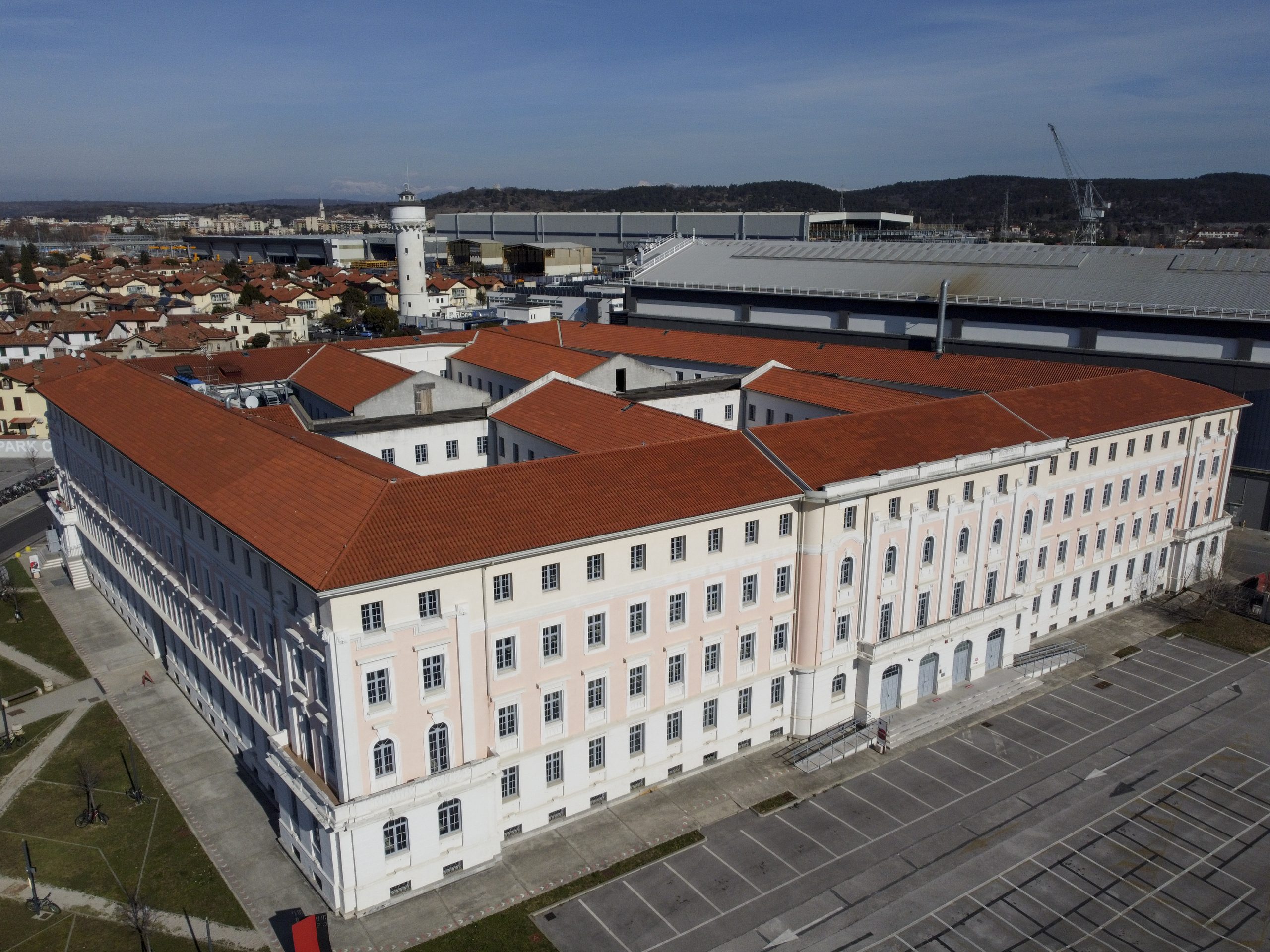
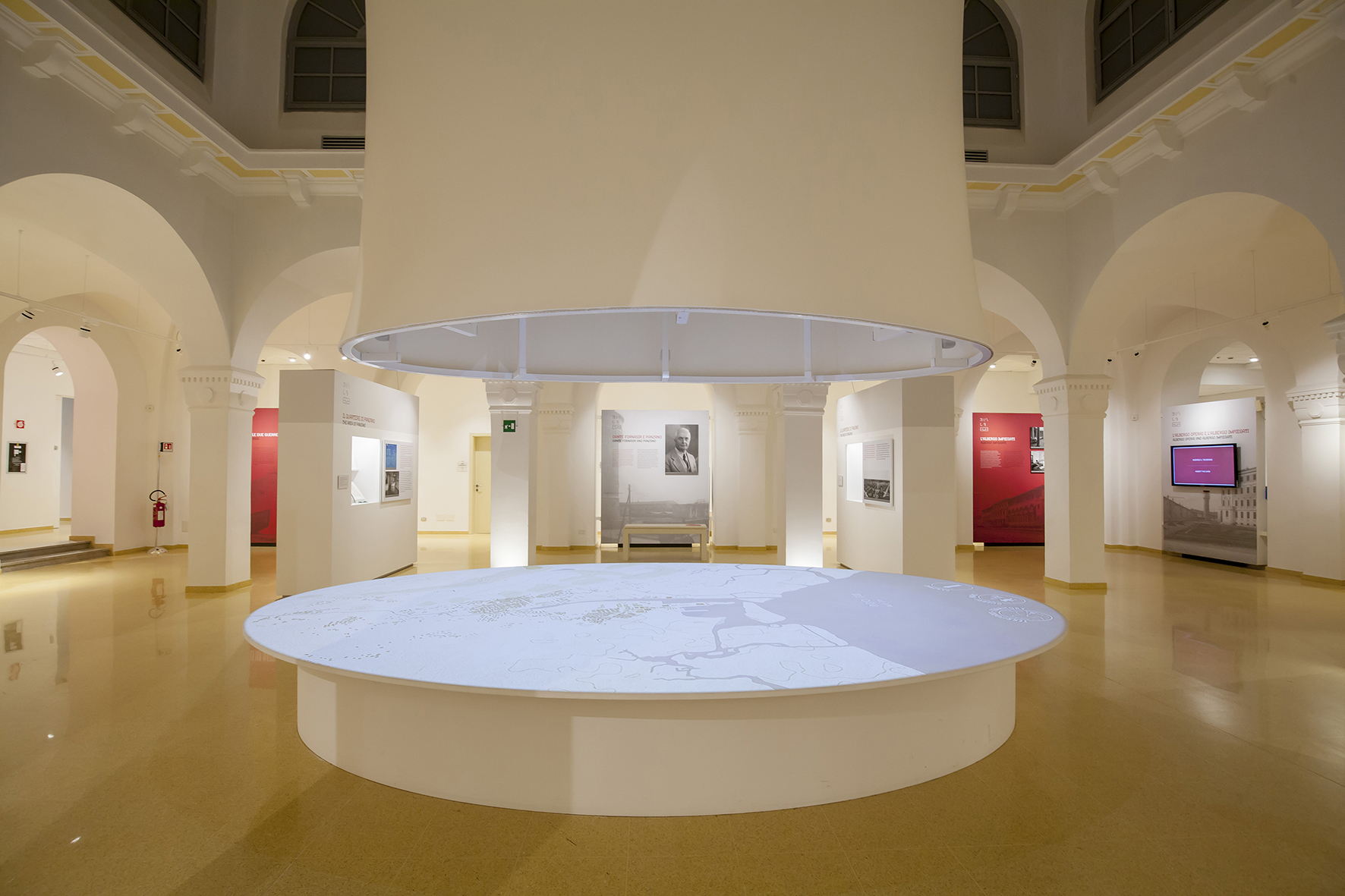
The history of shipbuilding in Monfalcone can be further explored at MuCa – the Monfalcone Shipbuilding Museum, located in the former workers’ hotel in Panzano, right beside the shipyards where cruise ships are still built today.
Panzano, a perfect ‘company town’
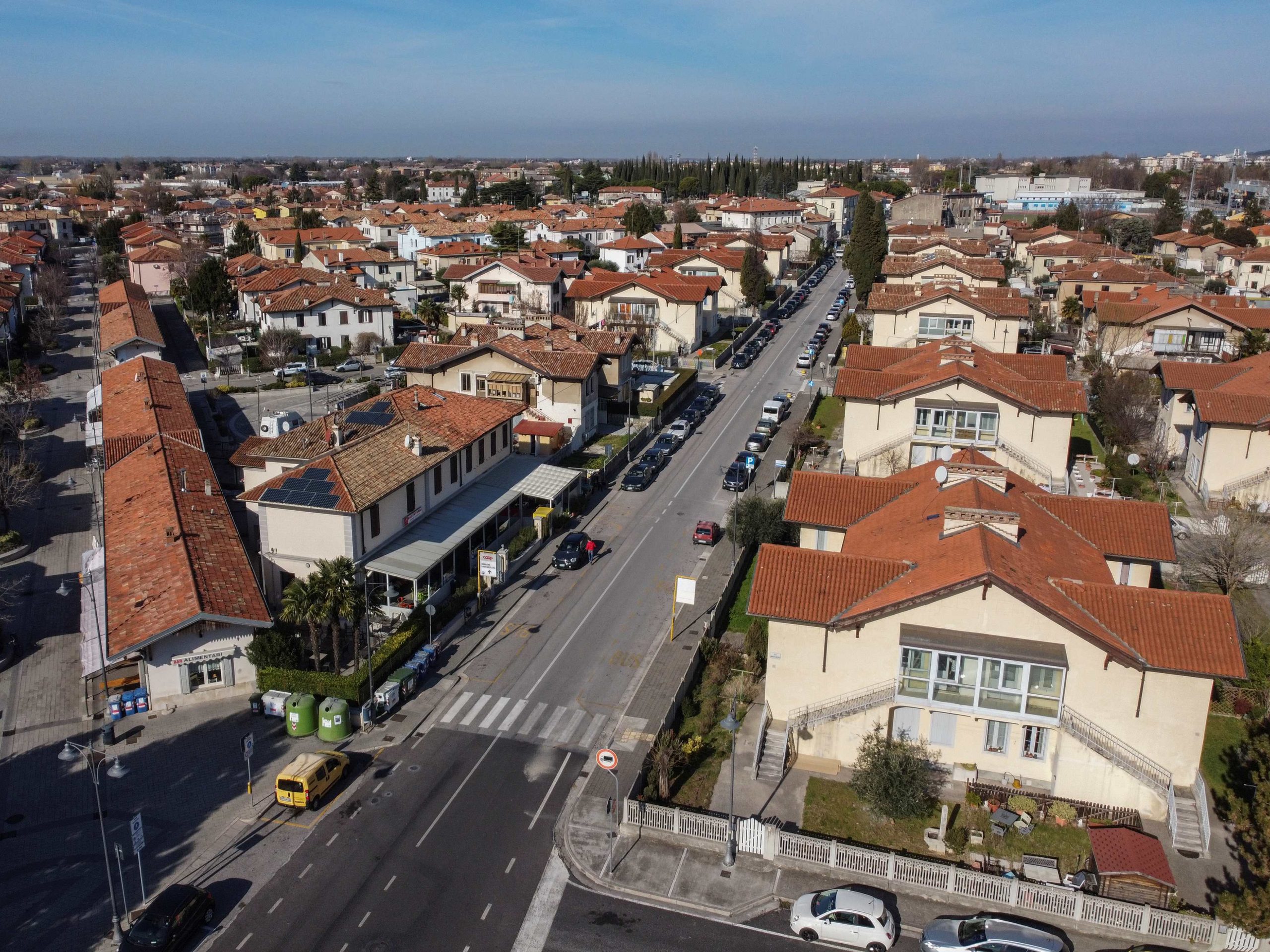
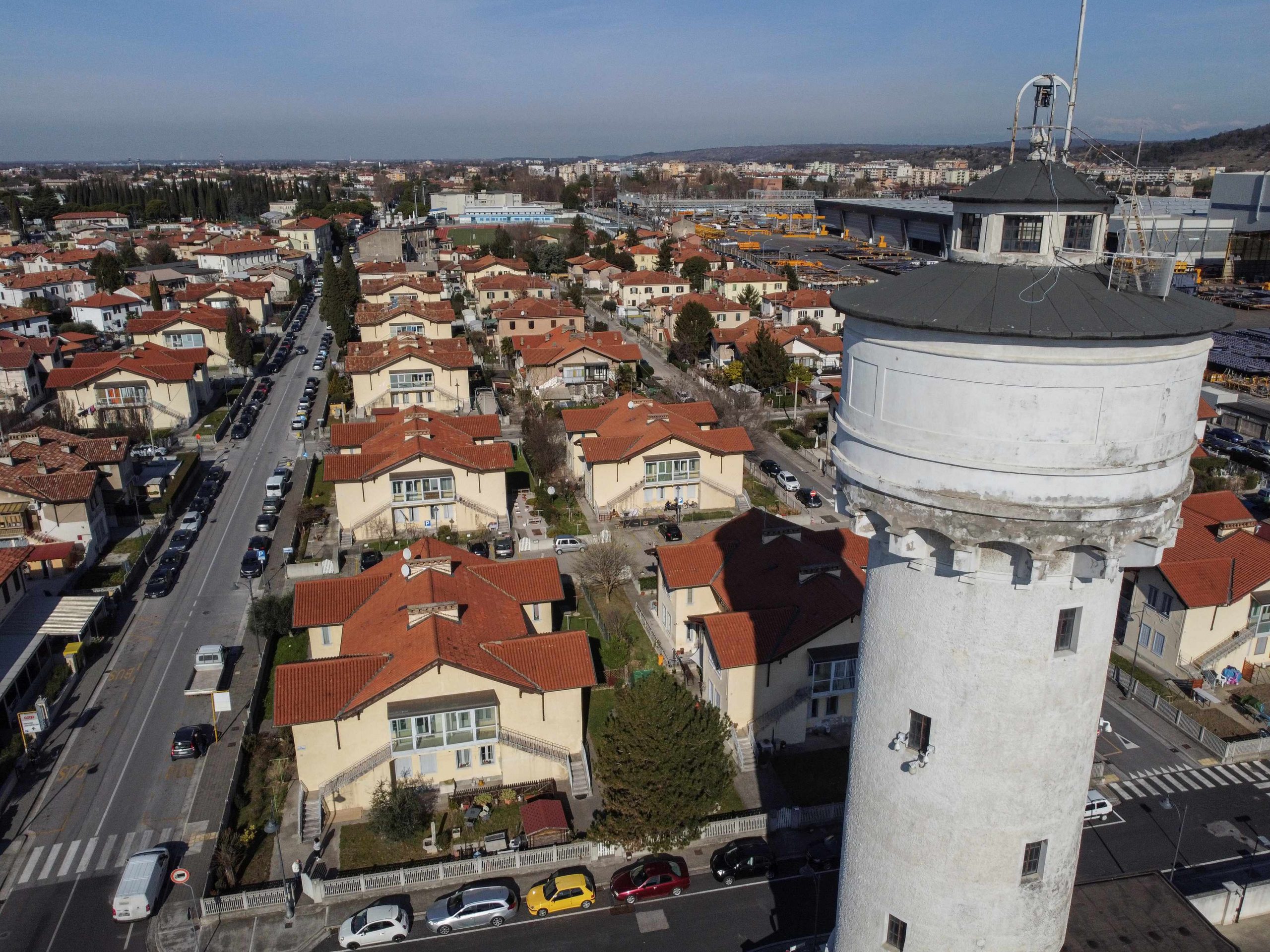
Heavy industry meant big numbers – both in output and in workforce. As the shipyard continued to expand, the Cosulich family conceived the idea of a workers’ village that could accommodate the Yard’s labourers and employees, who arrived in large numbers from Friuli Venezia Giulia and from Southern Italy. The design was entrusted to Dante Fornasir, who as early as 1913 presented the first proposal for the workers’ village, developing a fully fledged plan for its construction.
From 1918 onwards, Fornasir headed the construction company that, between 1920 and 1927, oversaw the building of Panzano, created on the model of the so-called ‘company towns’. The complex housed 5,000 people, with two large hotels for single manual and office workers, villas for executives, and other residential buildings. For the Cosulich family and Fornasir, however, Panzano was not meant to be just a ‘dormitory town’; guided by a strong sense of community, it was supposed to offer services and ancillary facilities that could encourage socialisation, as modern entrepreneurship would envision. Panzano was therefore equipped with schools, nurseries, a sports field, shops, a pharmacy, public baths, green spaces, and a theatre, the Euripide, which was destroyed during the Second World War.
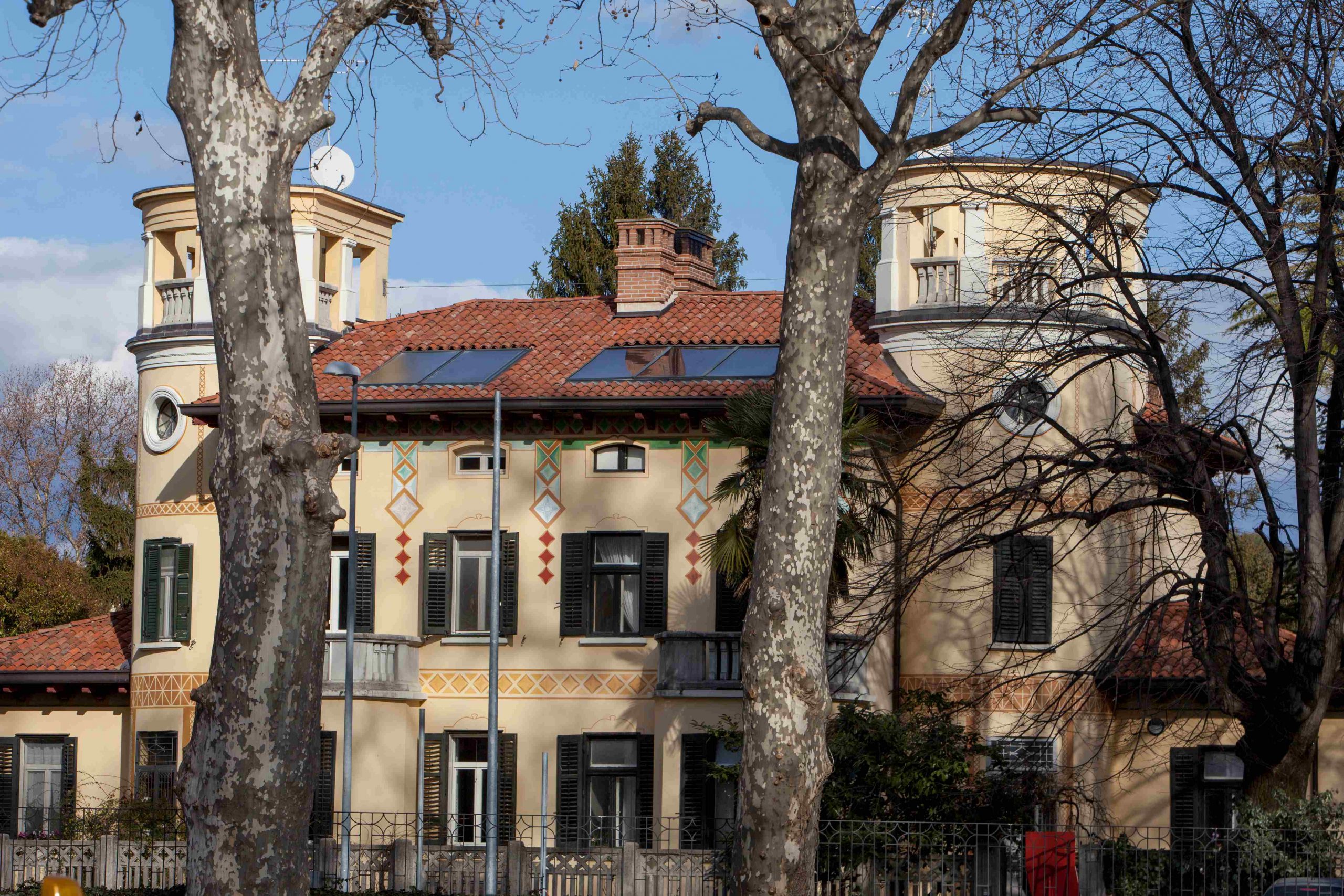
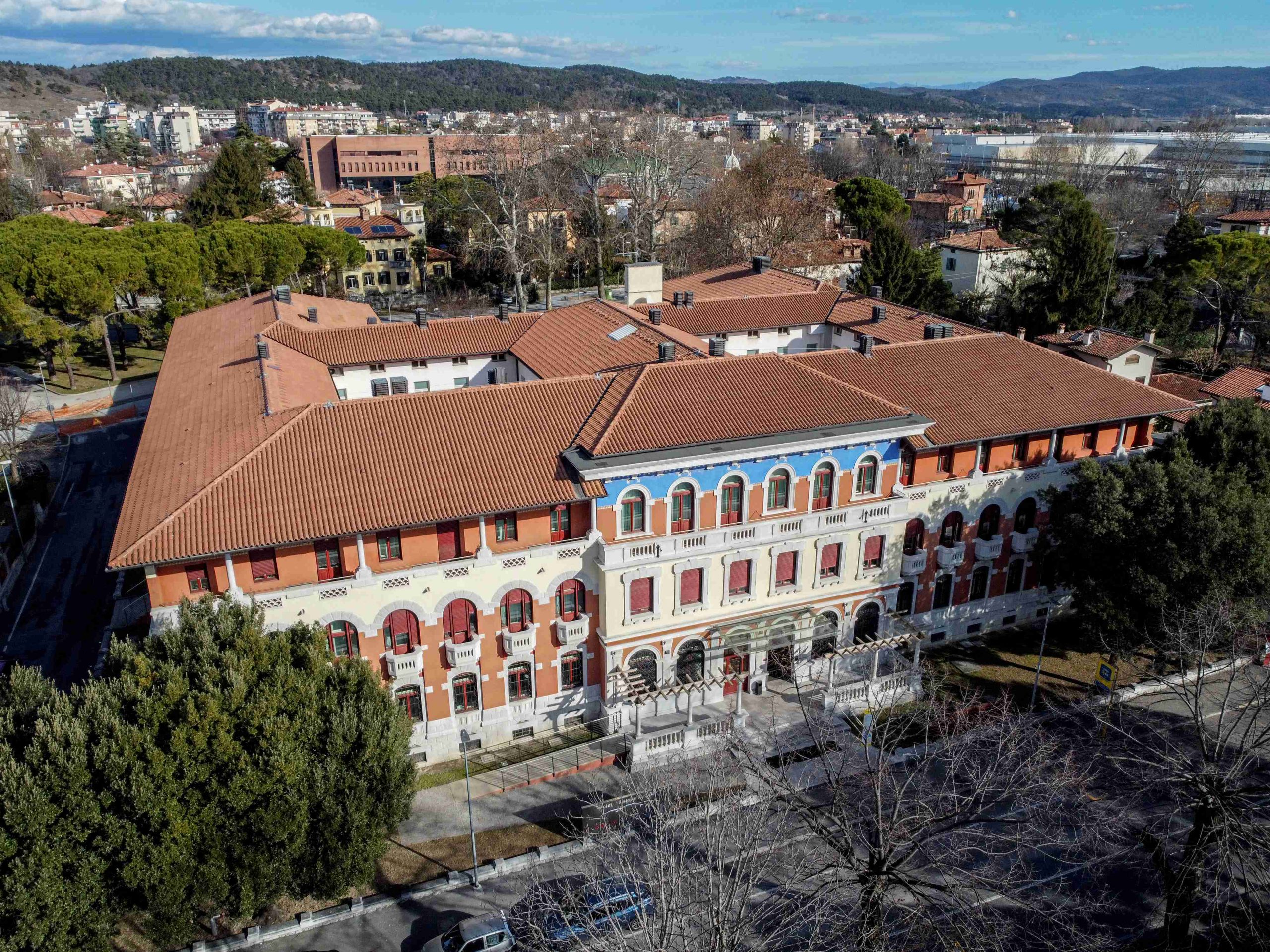
Today, walking through the streets of Panzano, one can still admire the buildings designed by Dante Fornasir. These include the former hotel for single employees, built in the Jugendstil style. It was restored between 2007 and 2009, preserving the original colours of the sottolinda decorations, the grand central staircase, and the columned hall. Also notable are the villas for employees and executives, with their eclectic style and vibrant decorative features. At the heart of the district stand the buildings dedicated to corporate welfare: the stadium, the commercial area, and the social spaces. Finally, there is the former workers’ hotel, now home to the MuCa – the Monfalcone Shipbuilding Museum, which tells the story of the shipyard and the city.
MuCa – Monfalcone Shipbuilding Museum
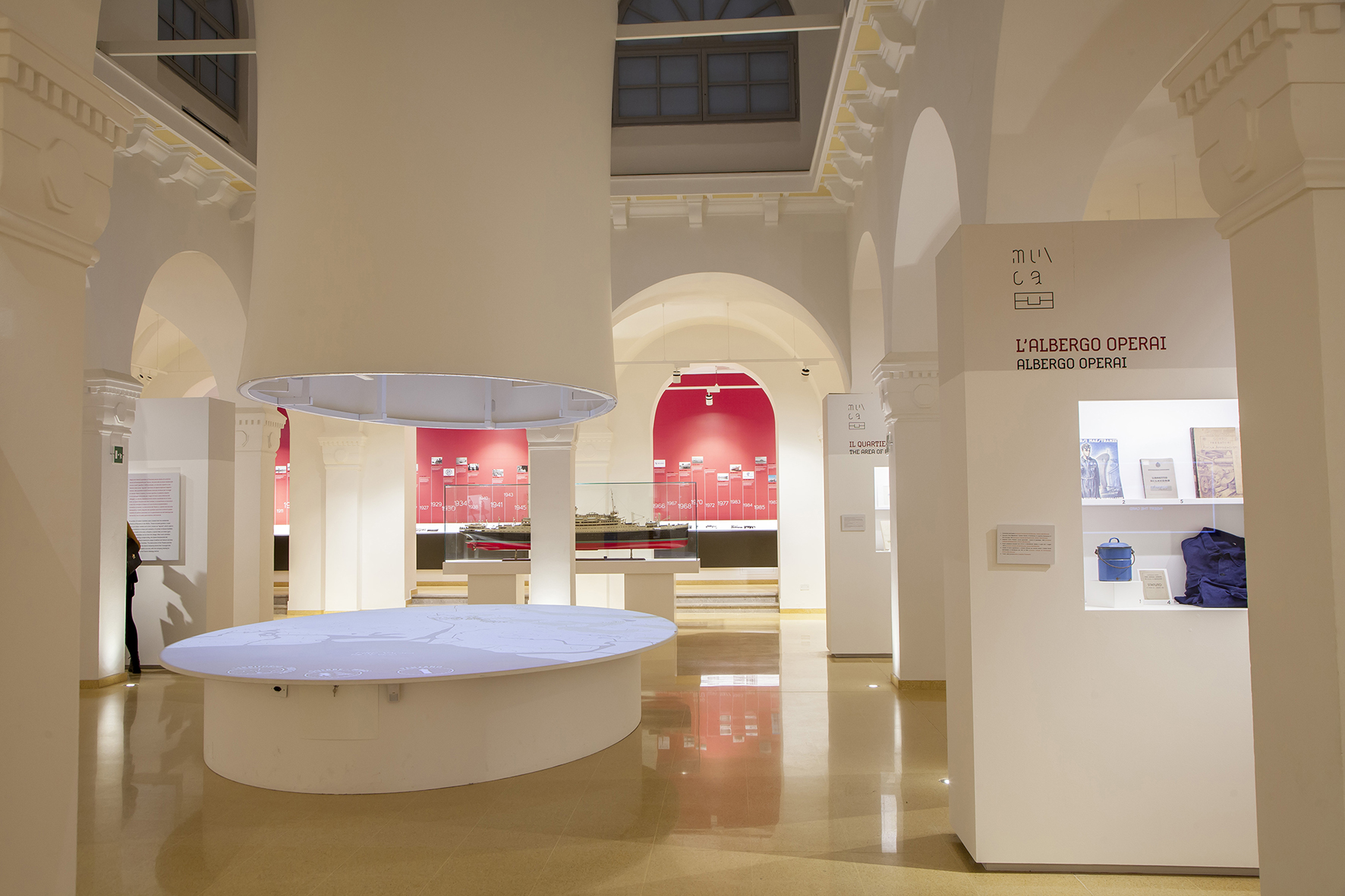
Housed within the fully restored former hotel for single workers, the MuCa in Monfalcone is a unique museum: there is no other museum dedicated specifically to shipbuilding.
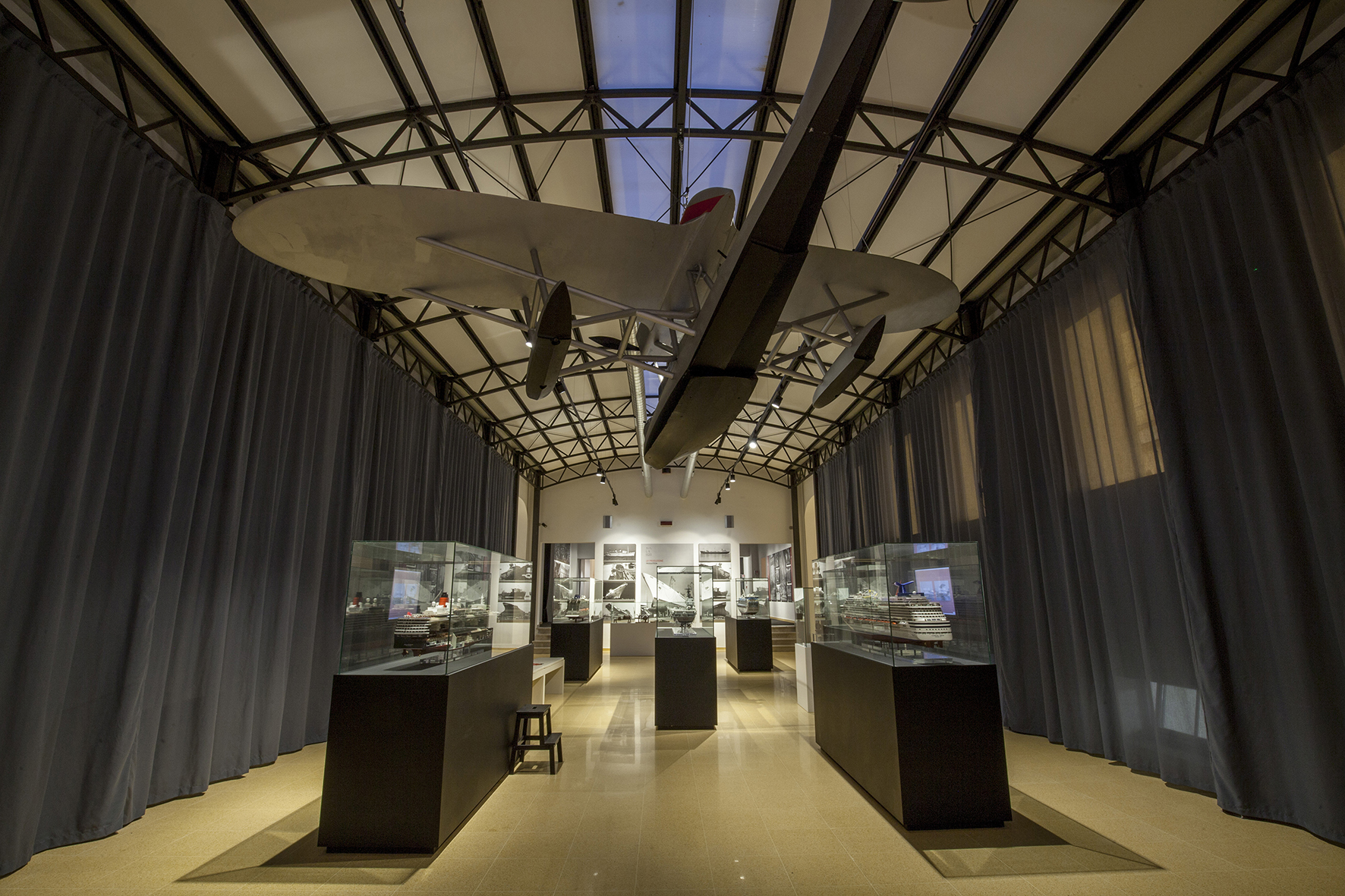
Along its immersive and interactive exhibition route, the story of the Shipyard is interwoven with the history of Italy itself, revealing how it has adapted to events and evolved over time – for example, shifting from the construction of merchant ships to military vessels and, more recently, to contemporary cruise ships. Moreover, the museum does not take a static approach; instead, it engages with the surrounding area by offering experiences beyond its exhibition rooms, such as visits to the production plant and walks exploring the workers’ village of Panzano.