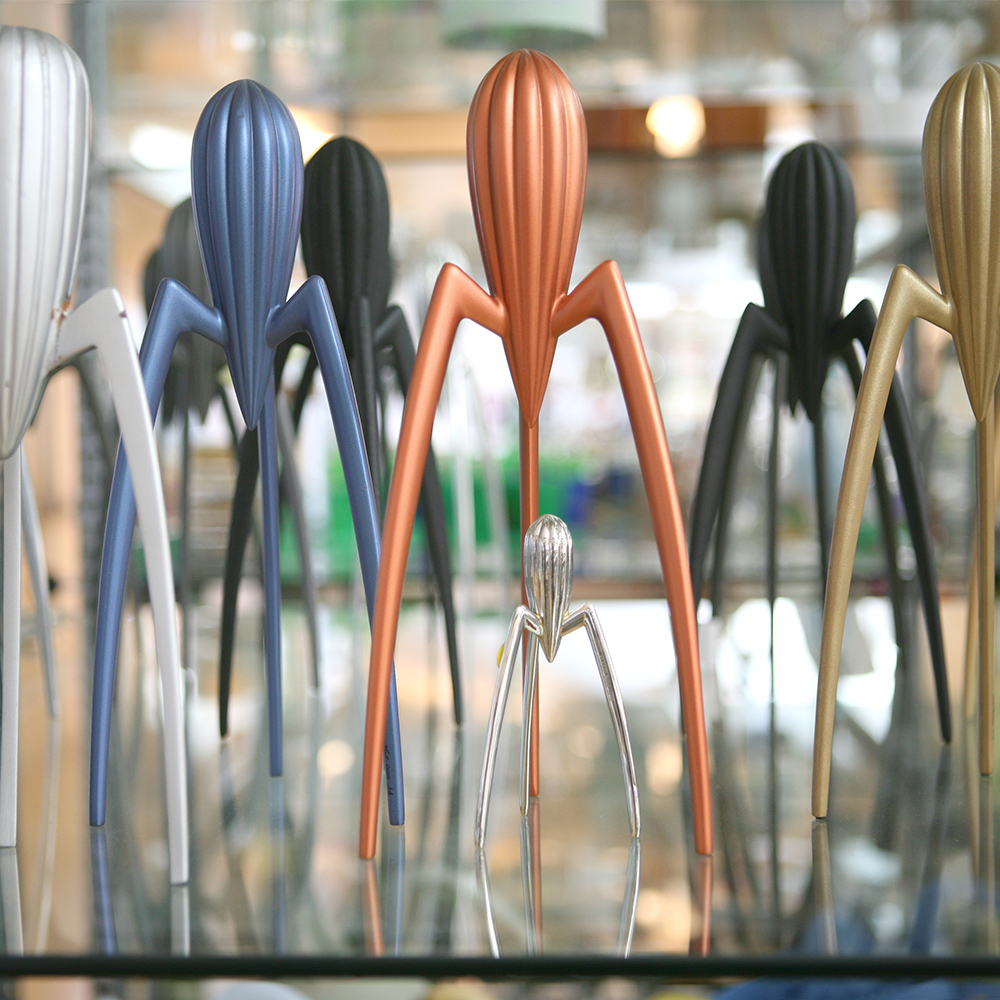
The Romanticism of Lake Orta and Alessi’s Museum-Archive: where irony becomes design
The calm waters of Lake Orta, the island of San Giulio crowning it, the wooded, rolling hills that surround it, the well-maintained, elegant towns, the sumptuous architecture, the flowering gardens, and the lawns mowed like golf course fairways are the hallmarks of this slice of Piedmont, which exudes romanticism in every square metre.
Orta San Giulio is the lake’s first attraction. Paved streets and alleys wind around Piazza Mario Motta against a backdrop of ancient buildings featuring loggias and porticoed courtyards, and the isolated Palazzo della Comunità, built in 1582, with the coats of arms of the bishops of Novara who governed the fief for 500 years and the fresco of Justice. Along the Motta climb, a parade of frescoed sixteenth-century buildings accompanies visitors to the Church of S. Maria Assunta, built in 1485 and rebuilt in the second half of the 18th century. Continuing along the cobbled road to the right of the church is the 400-metre ascent to the beautiful Sacro Monte. A UNESCO World Heritage site, Sacro Monte is a devotional complex comprising 20 frescoed chapels dedicated to St. Francis, and life-size groups of terracotta statues representing episodes from the saint’s life. On the edge of the village is Villa Crespi. Built at the end of the 19th century in the eccentric Moorish-style, it has since been transformed into a hotel hosting celebrity chef
Antonio Cannavacciuolo’s Michelin-starred kitchen.
From Orta, you can also reach the Island of San Giulio by boat. Shrouded in silence, it has a mystical aura. This may be due to the plaques placed along the island’s only pedestrian street, which invite reflection and meditation, or perhaps because since 1973, the Bishop’s Palace has housed the Mater Ecclesiae Benedictine Monastery, offering welcome and hospitality to pilgrims. The former diocesan seminary, located at the highest point of the island, was built in the 19th century on the ruins of an ancient castle. Here, cloistered nuns dedicate themselves to prayer, the restoration of tapestries and ancient fabrics, the sewing and embroidery of liturgical garments, and the meticulous painting of icons.
But this is also a region of solid creativity. Gianni Rodari was born in nearby Omegna, where plaques, a tour, a play area, and a museum are dedicated to him. In the same Omegna, the writer’s imagination is accompanied by the superb, long-standing craft tradition of a company that has grown to dominate world markets: Alessi. Since its inception, this iconic brand and outstanding example of Made in Italy in the industrial design sector and beyond, has filled homes with beauty, colour, functionality, and innovative, fun design.
An Italian design factory halfway between art and industry, Alessi has been the creative platform for such renowned designers as Philippe Starck, Ettore Sottsass, Achille Castiglioni, Richard Sapper, and Enzo Mari. Alessi has set up a museum and specialised archive in a building within the industrial complex in Crusinallo di Omegna, dedicated to 20th- and 21st-century applied art and design,.
The Alessi Museum
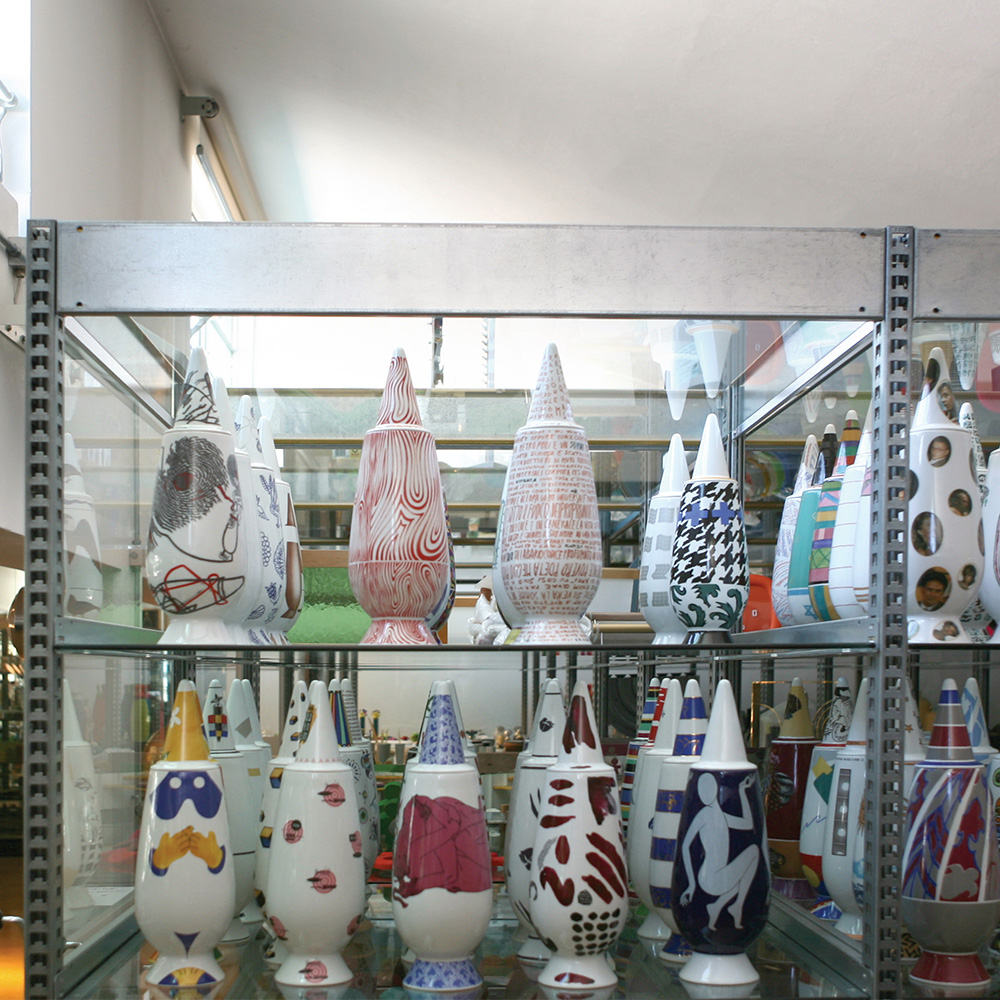
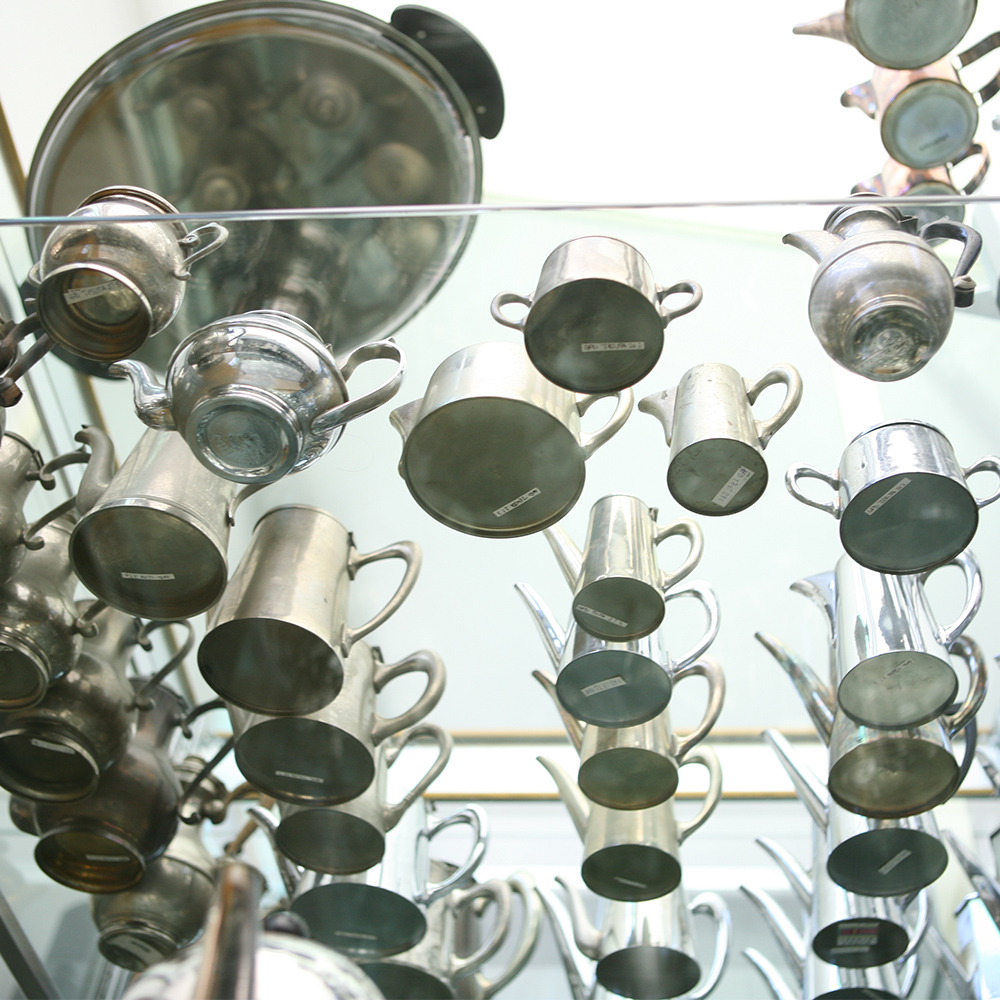
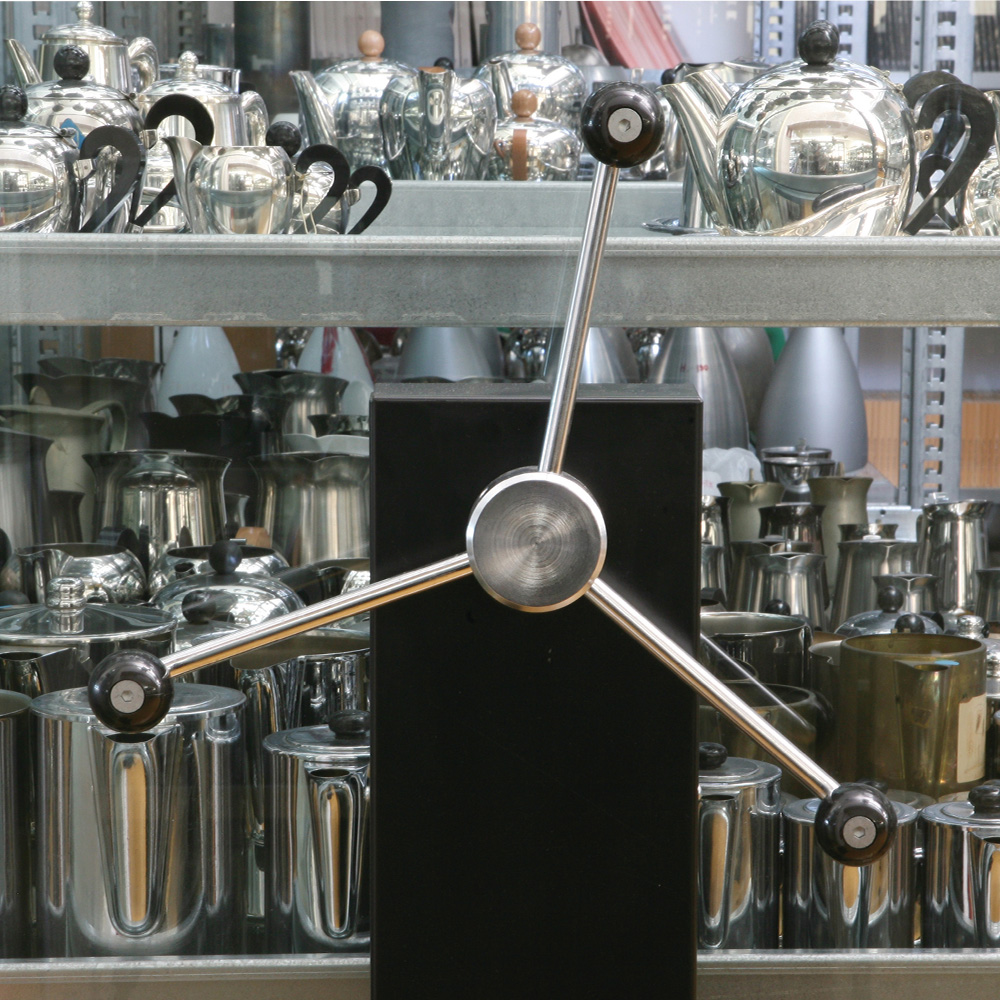
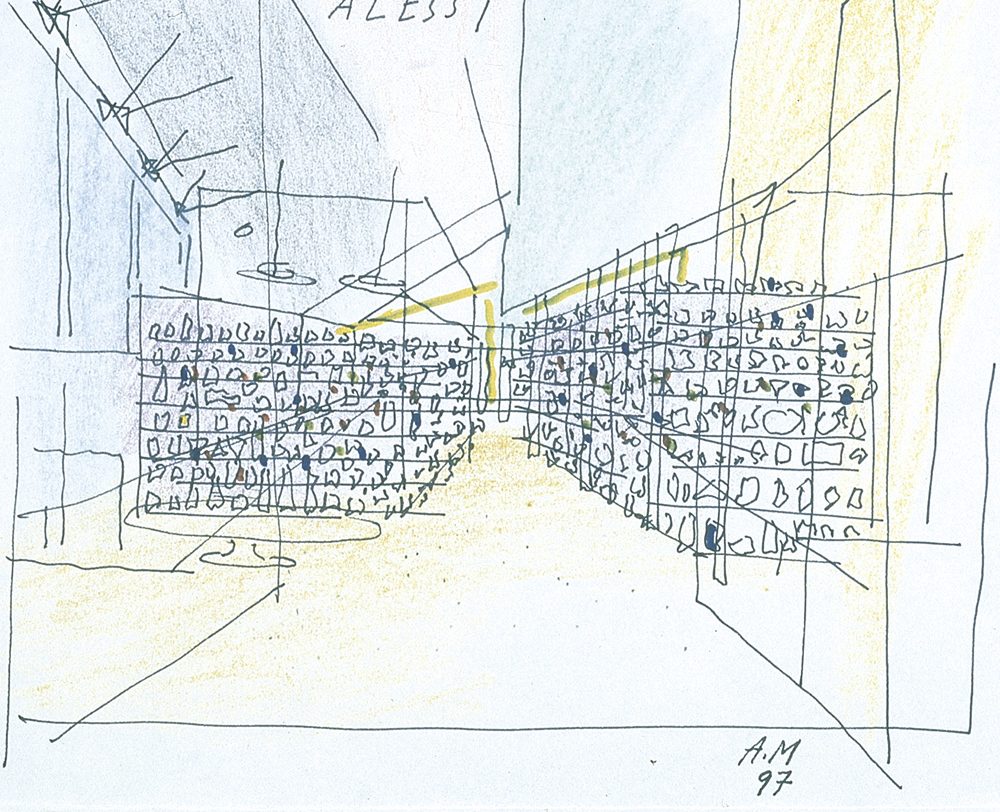
Part museum, part archive, Alberto Alessi dreamed of a hybrid collection, where the finished product is narrated through the intricate interweaving of activities and materials used to create it (prototypes, moulds, drawings, and projects). It serves as both an operational archive for the company, easily accessible to professionals, and a cultural reference for contemporary design.
The aim is not to attract visitors to the Omegna museum (which can only be visited by appointment, with at least two weeks’ notice requested via museo.alessi@alessi.com) but to bring the collection to an ever-changing audience. The iconic products of the collection, therefore, leave the Omegna museum, travel and fill other prestigious exhibition spaces with which Alessi collaborates to organise temporary exhibitions: the Centre Pompidou in Paris, Guggenheim Museum and MoMA in New York, Victoria & Albert Museum in London, Philadelphia Museum of Art, Triennale in Milan, Die Neue Samlung in Munich, Powerhouse Museum in Sydney, and Stedelijk Museum in Amsterdam.
In collaboration with