The ‘Rossoneri’ heritage and Portello, a green, modern neighbourhood
In courtyards, at the local parish youth centre, in parks, squares, and on beaches and pavements – any occasion is perfect for kicking around a ball, an empty can, or even a crumpled sheet of paper. From sport to social phenomenon, football is a passion that divides Italy during championships and club tournaments, yet unites it when the national team plays. In both cases, the result is a combination of emotion, ardour, and fervour.
That’s the way it is in Italy. The relationship between a fan and their favourite team is like a marriage, sealed in childhood with the vow: “I promise to be faithful to you always, in joy and sorrow, in health and sickness, to love and honour you as long as we both shall live.” After all, our favourite team gives us a lifetime of emotions: from the euphoria of victory to the sting of defeat.
And what better place to officially stamp the indissoluble bond between a club and its loyal supporters than a real museum?
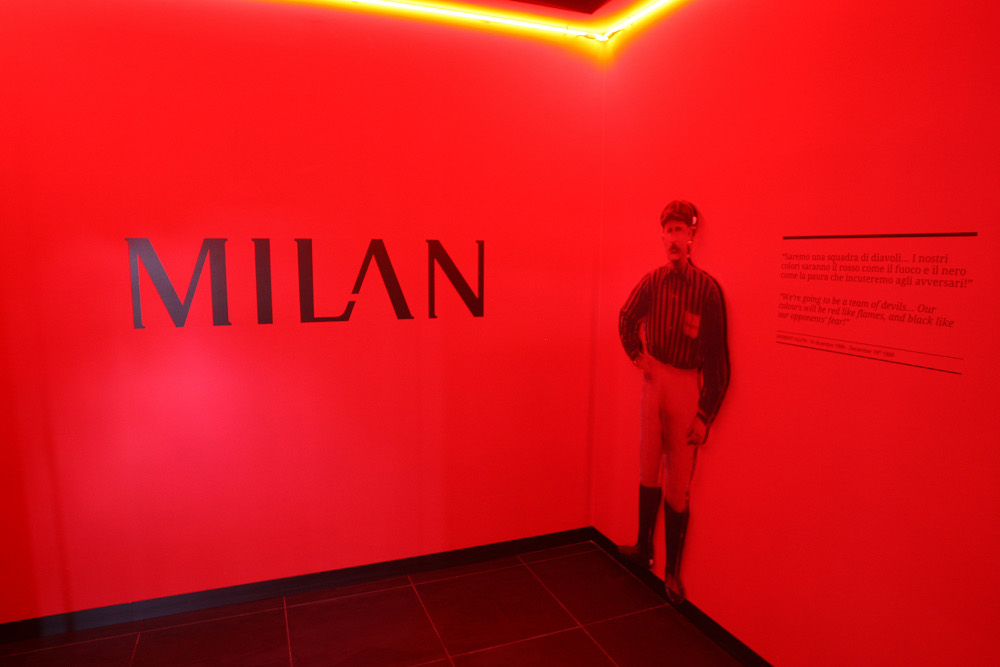
The ‘Rossoneri’ side of the Lombard capital understands this well, and celebrates the club’s rich history with the Museo Mondo Milan, from its unmistakable symbol, the Devil, by which AC Milan is known globally, to the founders’ original motto: “Our colours will be red like fire and black like the fear that we will instil in our opponents!”
Museo Mondo Milan
Fire and fear also define the wedge-shaped building with its diagonal profile, one of the three “urban mountains” in Piazza Gino Valle, located in the Milanese district of Portello. This is Casa Milan, the headquarters of AC Milan. Inaugurated in 2014, it houses the official ticket office, company offices, a flagship store, a bistro, and, last but not least, the Museo Mondo Milan.
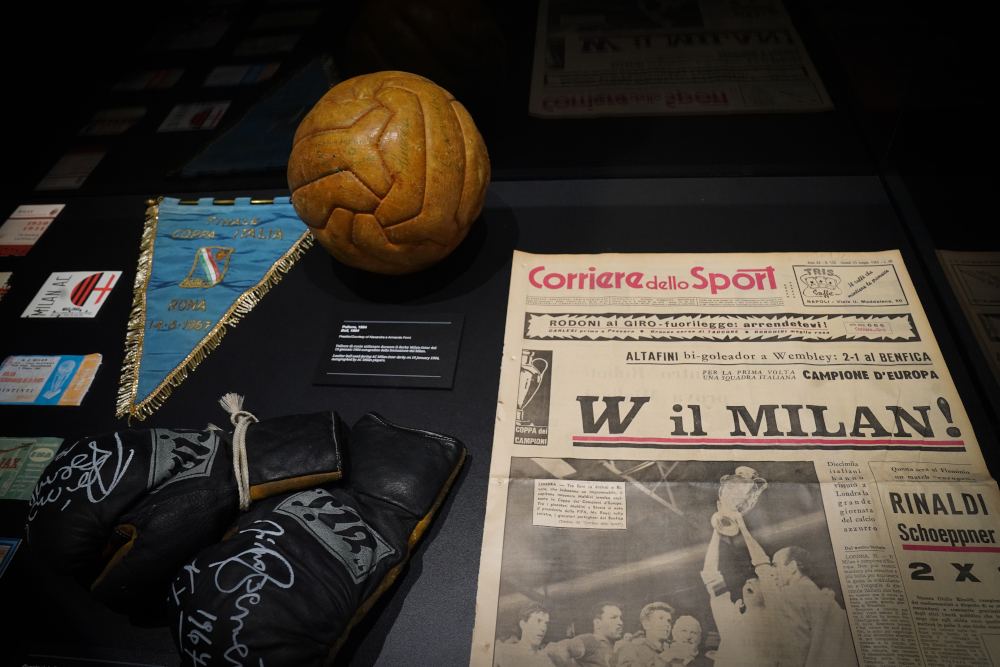
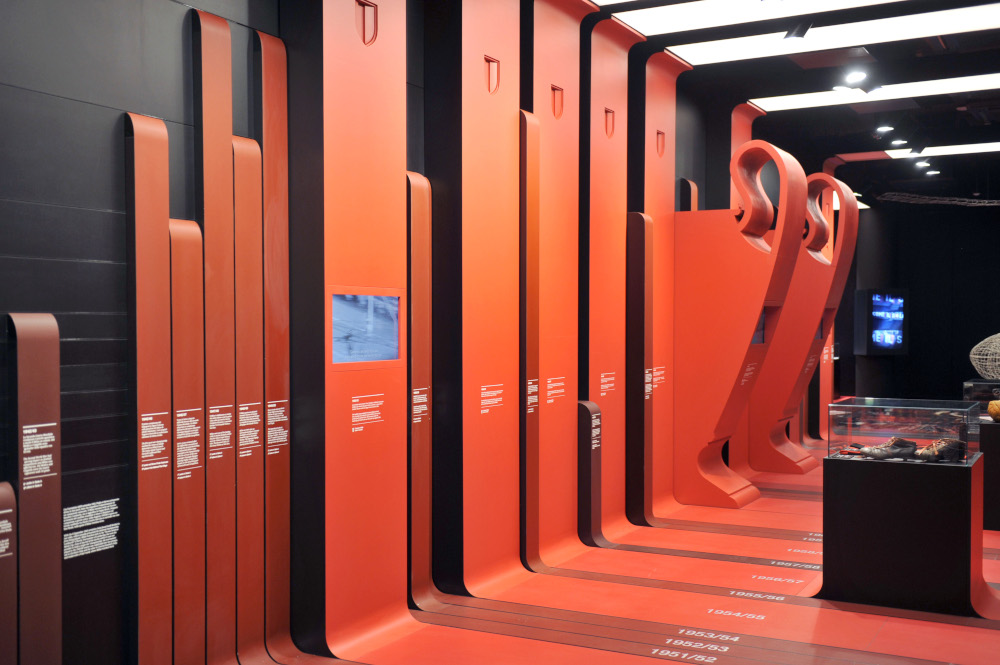
Over 120 sports seasons are condensed in the museum itinerary: lights, technologies, projections, and interactive panels catapult tourists and fans into the heart of the most memorable moments that the Devil of football has experienced in fields around the world. Relics, trophies, shirts, and memorabilia are the highlight of the exhibition, but the visit also unveils episodes and anecdotes from the club’s foundation years, thanks in part to a surprising and decidedly avant-garde holographic theatre. For instance, we learn that it was the football passion of a young weaver from Nottingham, Herbert Kilpin, that brought modern football – started in Victorian England and already successfully exported to Genoa and Turin – to Milan. Kilpin simply needed to find quality players and an influential president, like Alfred Edwards, a British diplomat in Lombardy, to bring the Milan Football and Cricket Club to life on 16th December 1899. A few months later, the team’s captain, David Allison, scored the first goal in AC Mlian’s history: it was 11th March 1900, and the match was Milan versus Mediolanum – probably the first derby in Milanese football.
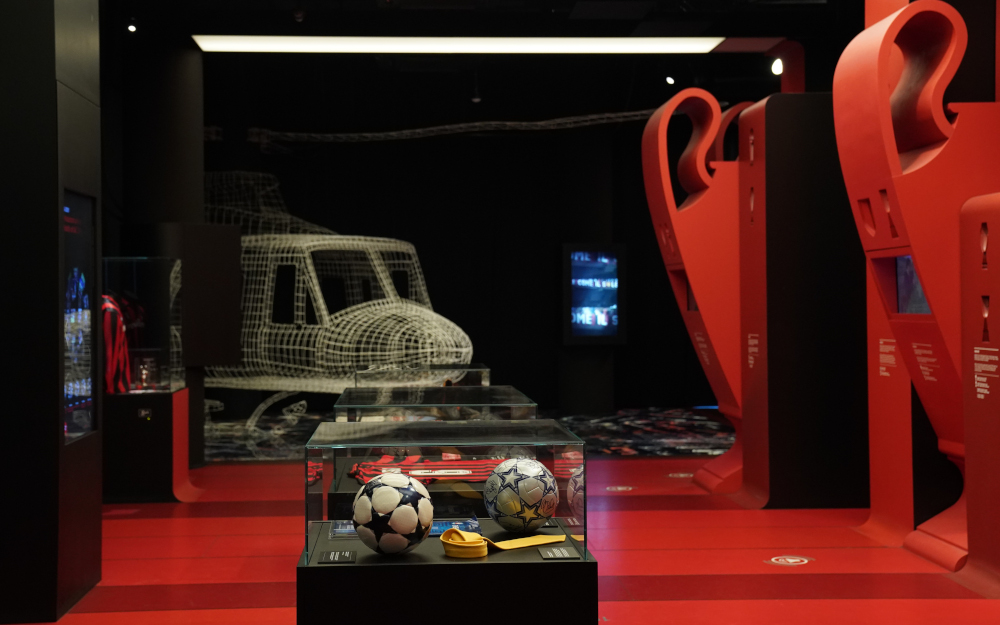
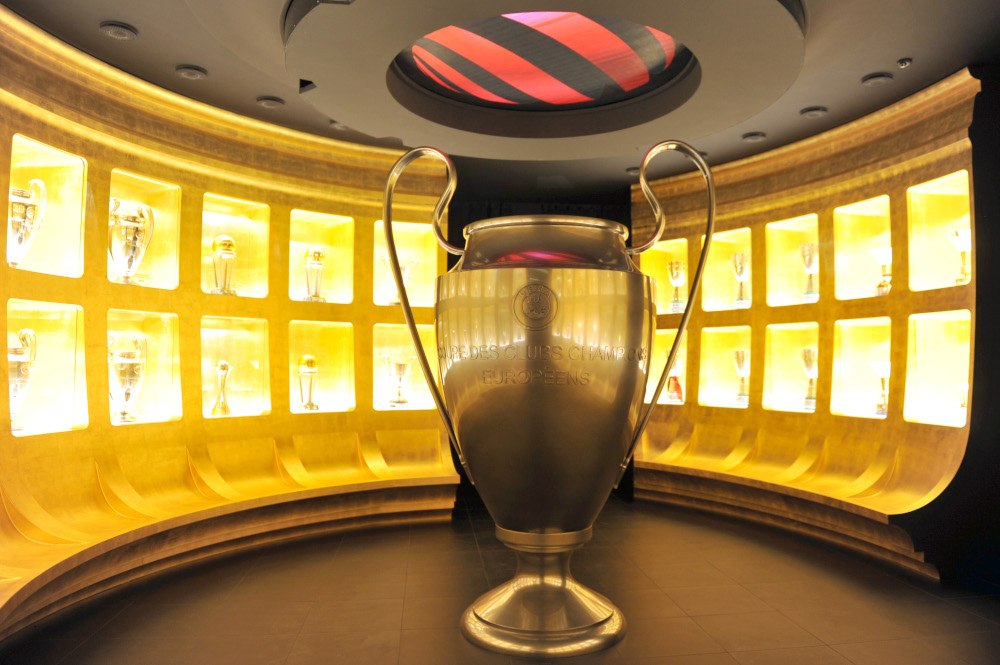
The visit to the Museo Mondo Milan follows a crescendo of emotions that culminates in the Trophy Room. Forty-two cups of different shapes and sizes surround the centre of the room, forming a circle around a monumental replica of the Champions Cup (measuring three metres in height and taking over 680 hours to create). The handles of the Champions League Cup, dubbed the ‘big ears’, have been adorned with the Club’s red and black colours seven times.
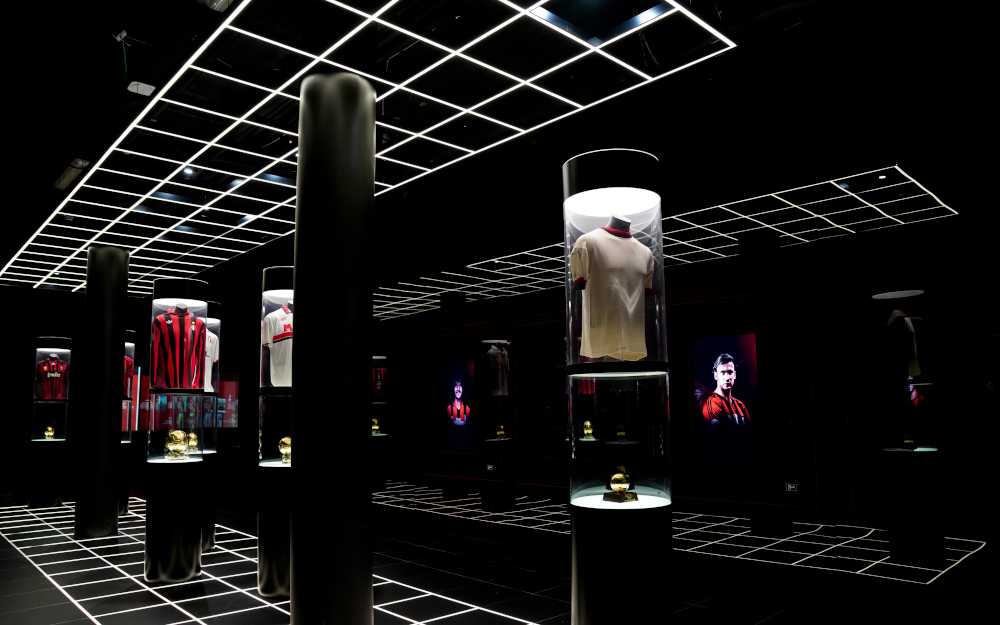
While football is undoubtedly a team sport, it is equally true that the inspiration and personality of an individual can make a decisive difference to a match up to the final whistle. This is why the museum’s Hall of Fame is so popular with visitors: images, statistics, quotes, and goals from AC Milan’s 100 greatest champions fill the room. At the centre stand the names of the greatest among the greats: the five AC Milan Ballon d’Or winners, namely Gullit, Van Basten, Shevchenko, Kaká, and George Weah, the 1995 Ballon d’Or winner and current President of Liberia, his home country. Also honoured are Baresi and Maldini, Liedholm and Altafini, Trapattoni, and all the great protagonists of the nineteen Italian Serie A league titles, including the most recent, won on 22nd May 2022.
A space within the museum is also dedicated to the Milan Foundation, the public charity linked to the broader context of the AC Milan Group’s commitment to responsibility and sustainability.
Finally, 260 square metres are dedicated to exhibitions and temporary displays. It is fitting that some spaces remain flexible, because while the history of AC Milan has been written continuously since 1899, its future is still to be told.
For information, visit link
Portello, a green, pop, and modern district
We are in Portello, an area that was once occupied by an industrial district, located next to the former trade fair building. In 1910, when grass still grew here, the ‘Anonima Lombarda Fabbrica Automobili’, later known as Alfa Romeo, established its production facilities on this land. The gradual relocation of factories outside the city paved the way for a complete redevelopment of the area.
Leaving behind the legacy of AC Milan, the district has made space for the all-glass and steel modernity of Piazza Gino Valle, the largest square in the city, named after the renowned Friulian architect who passed away before his urban plan was completed. The architectural style of Piazza Valle is functional, relying on the strong visual impact created by the interaction of spaces and volumes. A massive base, sloping gently towards the ground below, showcases a complex array of curvilinear geometric patterns across its surface. Three solid buildings (one of which houses Casa Milan) stand on the square, their asymmetrical shape and position offering passers-by different perspectives at every turn.
In close harmony with the minimalist architecture, Emilio Isgrò’s work “Grande Cancellatura per Giovanni Testori” is positioned along the square’s perimeter. With an imposing bas-relief, the Sicilian master of visual poetry honours the stories of “Il Ponte della Ghisolfa” by Giovanni Testori. In his signature ‘erasure’ style, Isgrò evokes tales of working-class life and the suburbs, of labour, struggle, and social redemption.
The lines of the sloping pavement lead towards a pedestrian bridge that crosses the ring road and connects to the Alfa Romeo Industrial Park, a fine example of urban green space inaugurated in 2011. Rubble and debris from the area’s industrial past have been transformed into a winding system of hills and levels, following the design concept of the postmodern landscape guru, Charles Jencks, and executed by his colleague, Andreas Kipar.
Three hills with evocative names—Prehistory, History, and Present—form a dynamic green area full of visual interest. At the centre, an artificial lake is surrounded by a 208-meter-long bench made from greenish wood and iron in traditional Milanese style. This bench holds the title of the longest in the world. Below the lake, the park’s most secluded corner, the Time Garden, offers a tranquil retreat. Inspired by Japanese Zen gardens, it features pebbles, drawings, words, and different types of plants, narrating a journey through time and providing an unexpected sensory experience.
A short climb to the top of the hills rewards visitors with a panoramic view of Monte Stella, another notable park in the city, of City Life, and the Alpine peaks beyond.
In collaboration with