Val Camonica: discover rock engravings, a village of artists, and the Hydroelectric Energy Museum of Cedegolo
Located along the northern shore of Lake Iseo, the Camonica Valley stretches over 80 km, following the course of the Oglio River and ending at the Tonale Pass. Known as the Valley of Signs, this area is rich in rock art, which has earned it its status as a UNESCO World Heritage site. In Capo di Ponte, Ceto, and Darfo Boario Terme, parks and reserves showcase over 10,000 years of human history through symbols, images, and scenes of daily life carved into the rocks. This remarkable heritage is the legacy of the Camuni people (hence the name ‘Camonica’), who settled here during the Neolithic period. Visiting Val Camonica also offers the opportunity to explore the scenic beauty of the upper Iseo Lake and the heights of Mount Adamello, as well as thermal spas in Darfo Boario, or the artist village of Bienno. Narrow cobbled streets, arches, stone buildings with wooden balconies, and working mills powered by the Vaso Ré – an artificial canal that has diverted water from the Grigna mountain stream along the town’s streets for over 1,000 years – give the village a unique charm. Bienno, awarded the Italian Touring Club’s Orange Flag for excellency in tourism, has a long-standing tradition of ironworking, which has helped forge its identity as a vibrant village of artists, complete with forges, studios, and creative workshops.
Water holds particular significance in Val Camonica. Since the ‘white gold rush’ of the early 20th century – during which industrialists competed for the right to use the Valley’s many water courses for business purposes – it became one of Italy’s primary regions for hydroelectric power production. This is still true today, thanks to the presence of power stations built after the war.
The Museum of Hydroelectric Energy of Cedegolo
Founded in 1905 in Brescia, SEB – one of the main hydroelectric companies of its time – obtained authorisation to divert the waters of the Oglio River near Malonno in October 1908, after numerous objections from the communities affected, who highlighted the significant impact of the structural works on the local area and the alteration of water availability for artisanal, and agricultural and pastoral activities. However, compensation, indemnities, agreements for free electricity supply, and promises, never fulfilled, regarding the construction and development of industrial plants in the area, led to the project being accepted and approved.
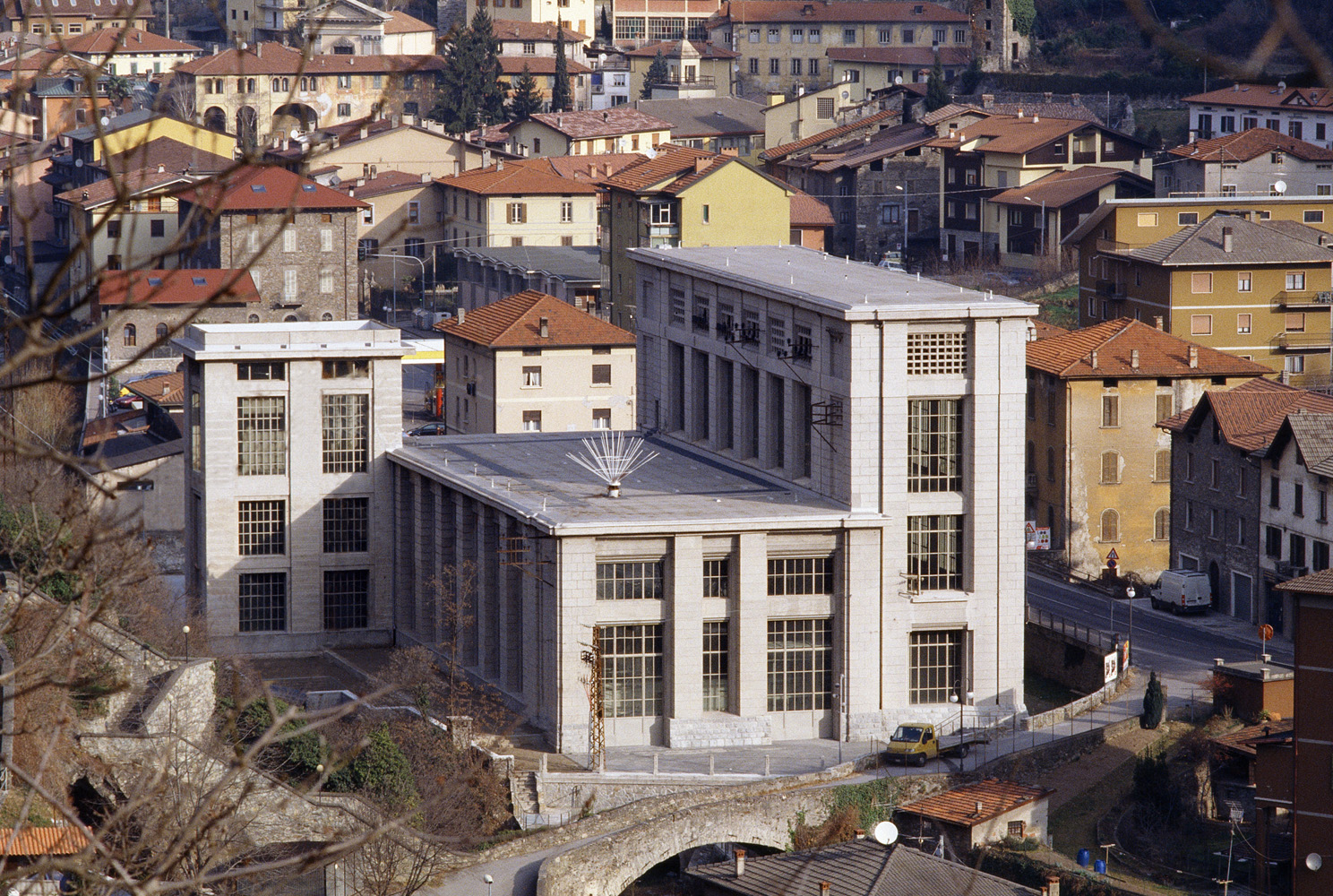
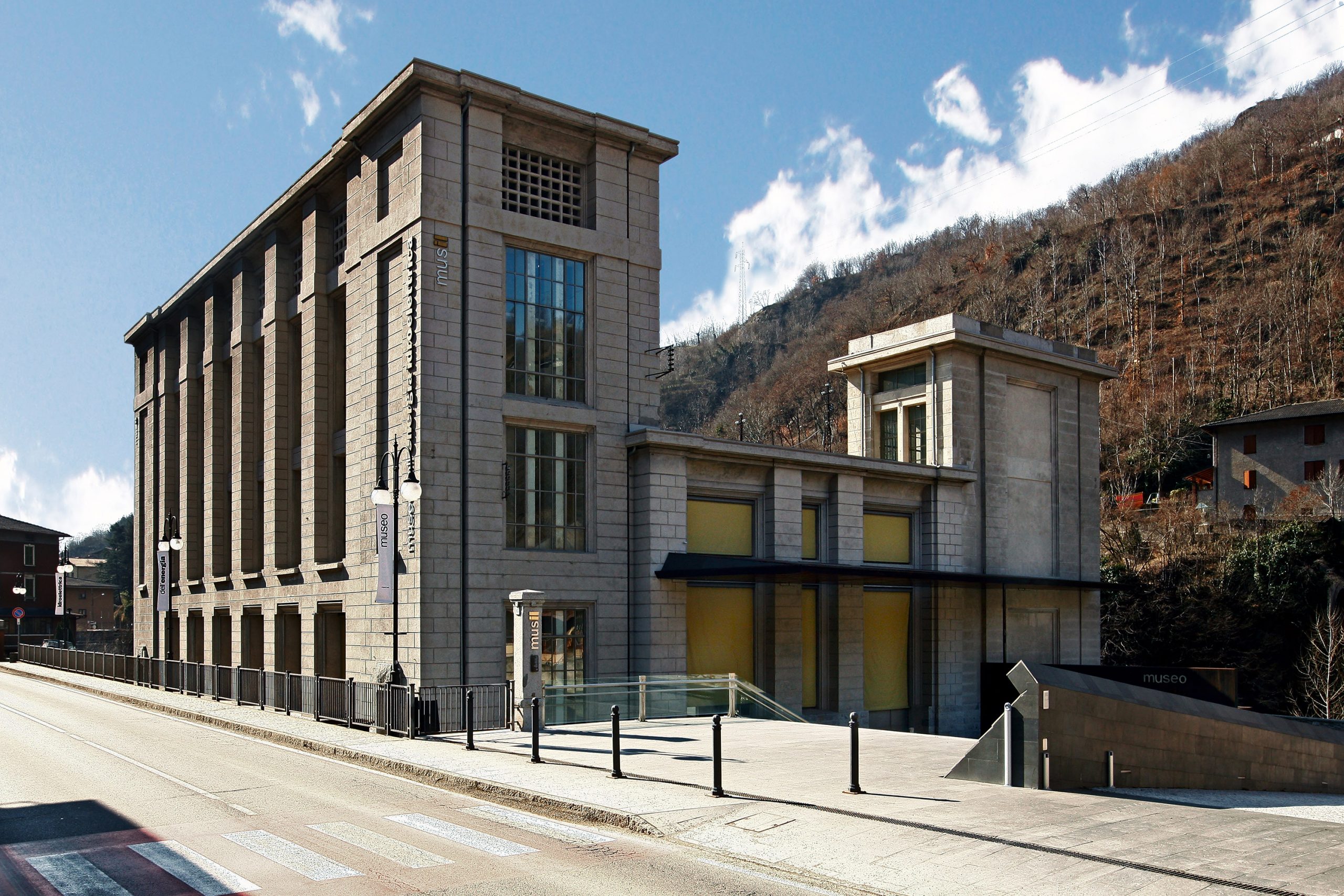
Between 1909 and 1910, the Cedegolo power plant was built, unusually located in an urban context rather than, as is typical, in side valleys or high mountains. This location was determined by the location of the diversion and the need to exploit the head at a favourable point: the waters, conveyed into the loading tank via an 8-kilometre canal, entered the underlying power plant through two penstocks, after a “drop” of almost 100 metres.
The building, designed by Egidio Dabbeni, reflects the early modern architectural trend through its pioneering use of reinforced concrete, the rigorous geometry of its structure, and the clear alignment between spaces and function: transformation and distribution were housed on the four floors of the street-facing section, production took place in the river-side section, and services and maintenance were located in the tower connected at right angles to the machine room. The spatial layout was determined by the entry point of the penstocks, which imposed the placement of the four turbine generators and the discharge channel on the river side. The discharge channel, after collecting the outflow, ran longitudinally through the building before returning the water to the river.
The plant’s usage declined significantly from 1950 due to the commissioning of the Cedegolo II plant. In June 1962, the original plant was decommissioned, and in December of the same year, with the nationalisation of the electricity sector and the absorption of SEB, ownership passed to Italy’s national electricity board (ENEL). Two years later, the machinery was dismantled, and the premises were repurposed as a warehouse.
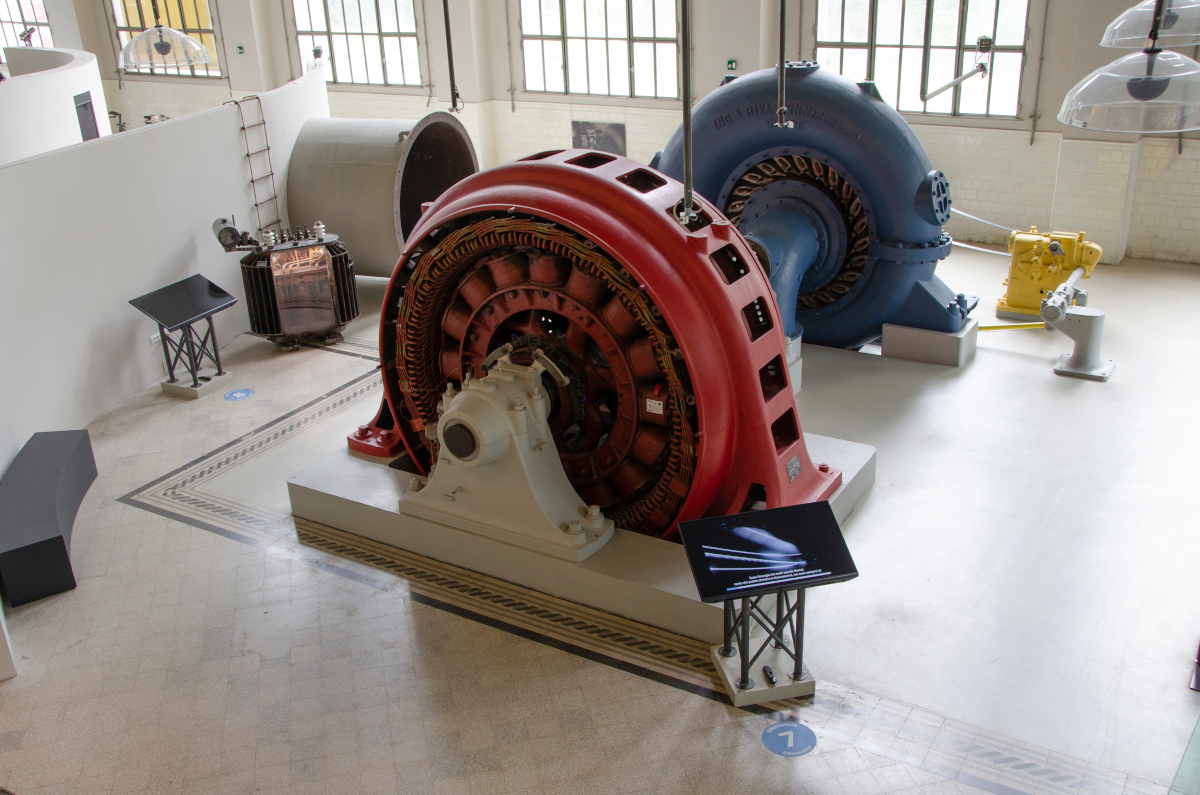
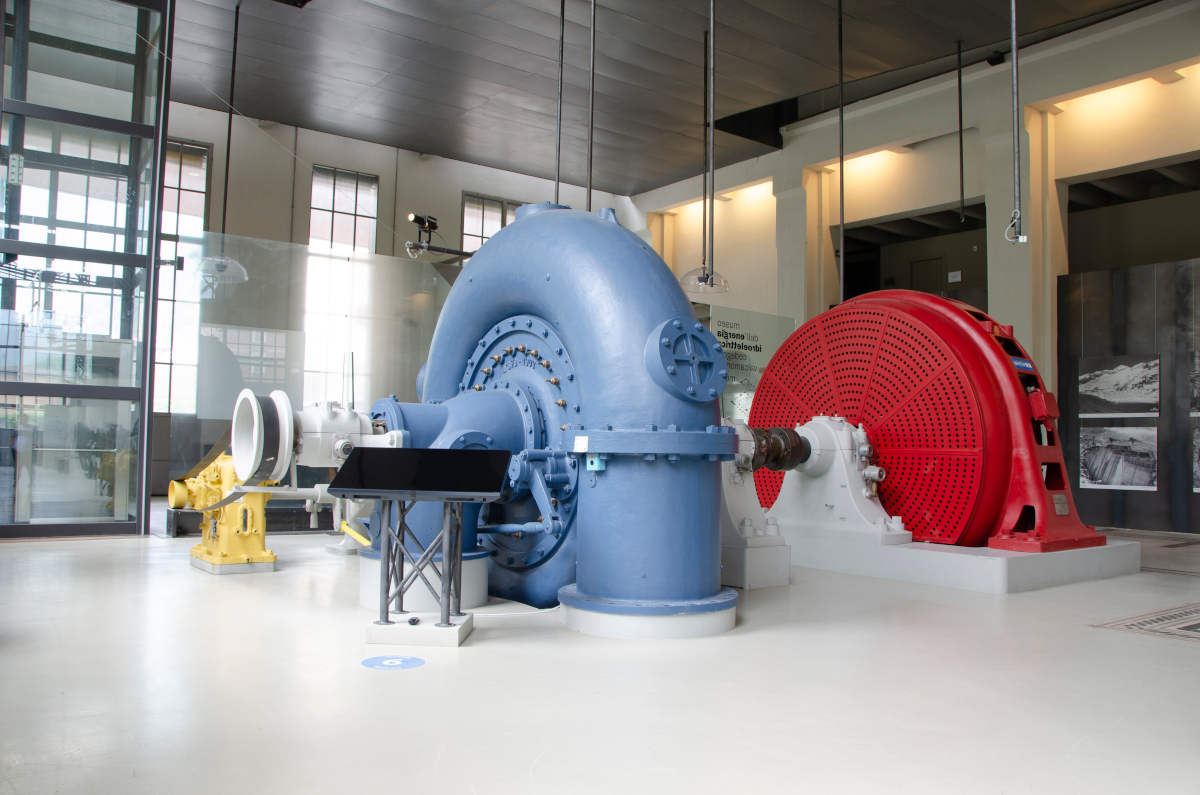
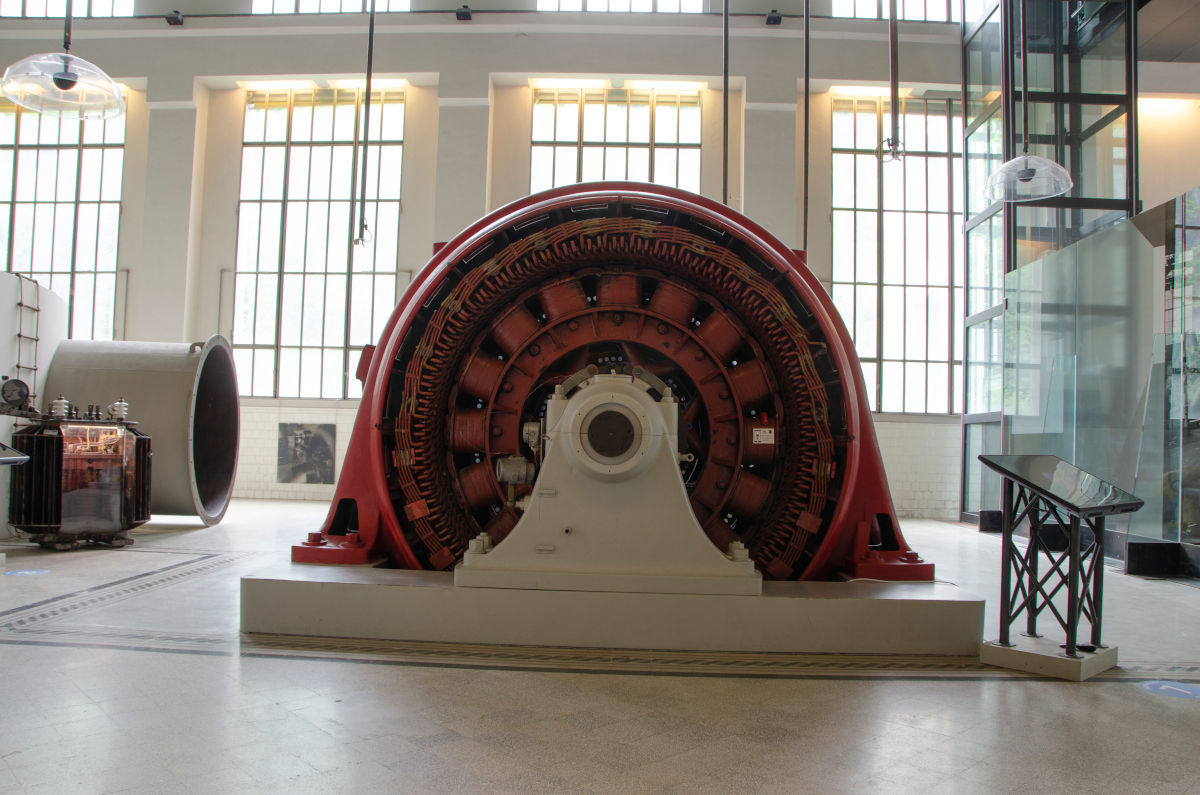
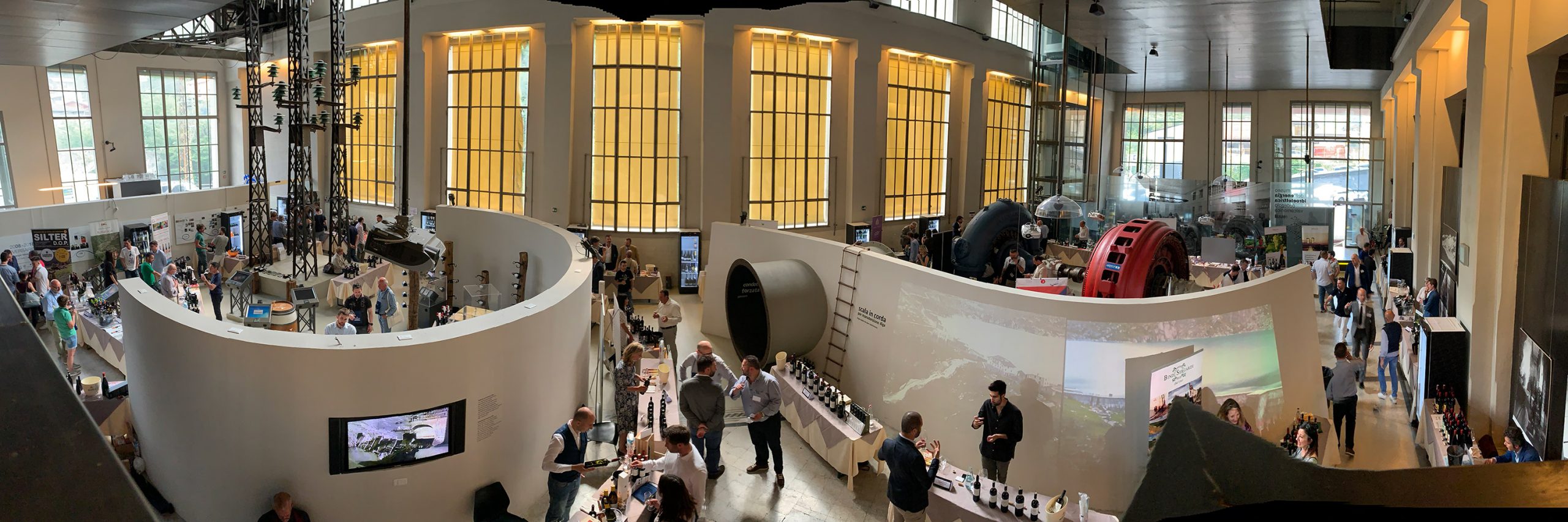
In 2000, the Municipality of Cedegolo purchased the building for conversion into a museum. Following restoration and set-up work, the Museum of Hydroelectric Energy of Valle Camonica was inaugurated in 2008 as a section of the Museum of Industry and Labour of Brescia. The exhibition traces the journey of water, from its formation in the atmosphere to its precipitation on the ground, from its condensation into ice to its collection in alpine lakes, from its harnessing in artificial dams to its arrival at the hydroelectric plant, where it is transformed into electricity through a technical and scientific process involving impressive vintage machinery.
Scientific content is communicated alongside historic technological artefacts, while testimonies from workers, technicians, and ordinary people provide a counterpoint to films that celebrate – thanks to the artistry of Ermanno Olmi – the unsung heroes of the construction of the great alpine hydroelectric plants.
Subsequent developments have provided the museum with new exhibition spaces, including a suspended large platform in the former machine room and on the building’s third floor. The visitor experience is enhanced by numerous interactive and multimedia installations, such as a 3D reconstruction of the operating machine room, a sand box, electric bikes, wall projections, and a large interactive wall where even children can trace the journey of energy from alpine reservoirs to our homes.
In 2015, the museum was recognised as an anchor point of the European Route of Industrial Heritage by the Council of Europe. Its expansive and thought-provoking spaces have hosted numerous temporary exhibitions, as well as a wide array of events, screenings, and performances.