Bracco and its history: Two working-class neighbourhoods that generate artistic and cultural initiatives
From an agricultural outskirts to a new industrial town in just over five years – that was how long the rapid industrialisation process of Lambrate took. It began in 1897, when the neighbourhood was still an independent municipality, with the founding of Gola. Bombelli arrived in 1898, followed by De Nora in 1923.
Lambrate was incorporated into the municipality of Milan, but the proliferation of factories continued unabated. Innocenti opened in 1933, and after the war, Cinelli followed in 1947, Faema in 1952, and Bracco in 1953.
Lambrate thus became Milan’s second industrial hub.
By the 1970s, however, the industrial fabric of the neighbourhood began to disintegrate, following the decline of Innocenti.
Lambrate: from industrial district to creative hub
Early 2000s. The site-specific installation by Patrick Tuttofuoco – the word “LUNA” spelled out in neon on a building at the corner of Via Ventura and Via Massimiano – marked Lambrate’s entry into the orbit of urban regeneration. The post-industrial legacy of its architecture, combined with the emergence of workshops for artists, designers, architects, and creative talents of all kinds, alongside galleries and cultural spaces, earned Lambrate the reputation of being Milan’s Brooklyn or Kreuzberg.
Then came Design Week: Lambrate thrived, becoming a glorious design district for thirteen years. Initially known as Ventura Lambrate, it later became the Lambrate Design District.
The neighbourhood has adeptly navigated the waves of change that have swept through it and today remains one of Milan’s most attractive areas. Eclectic and multifaceted, multicultural and dynamic, it is brimming with artistic and cultural initiatives, clubs, meeting places, museums, and vintage boutiques.
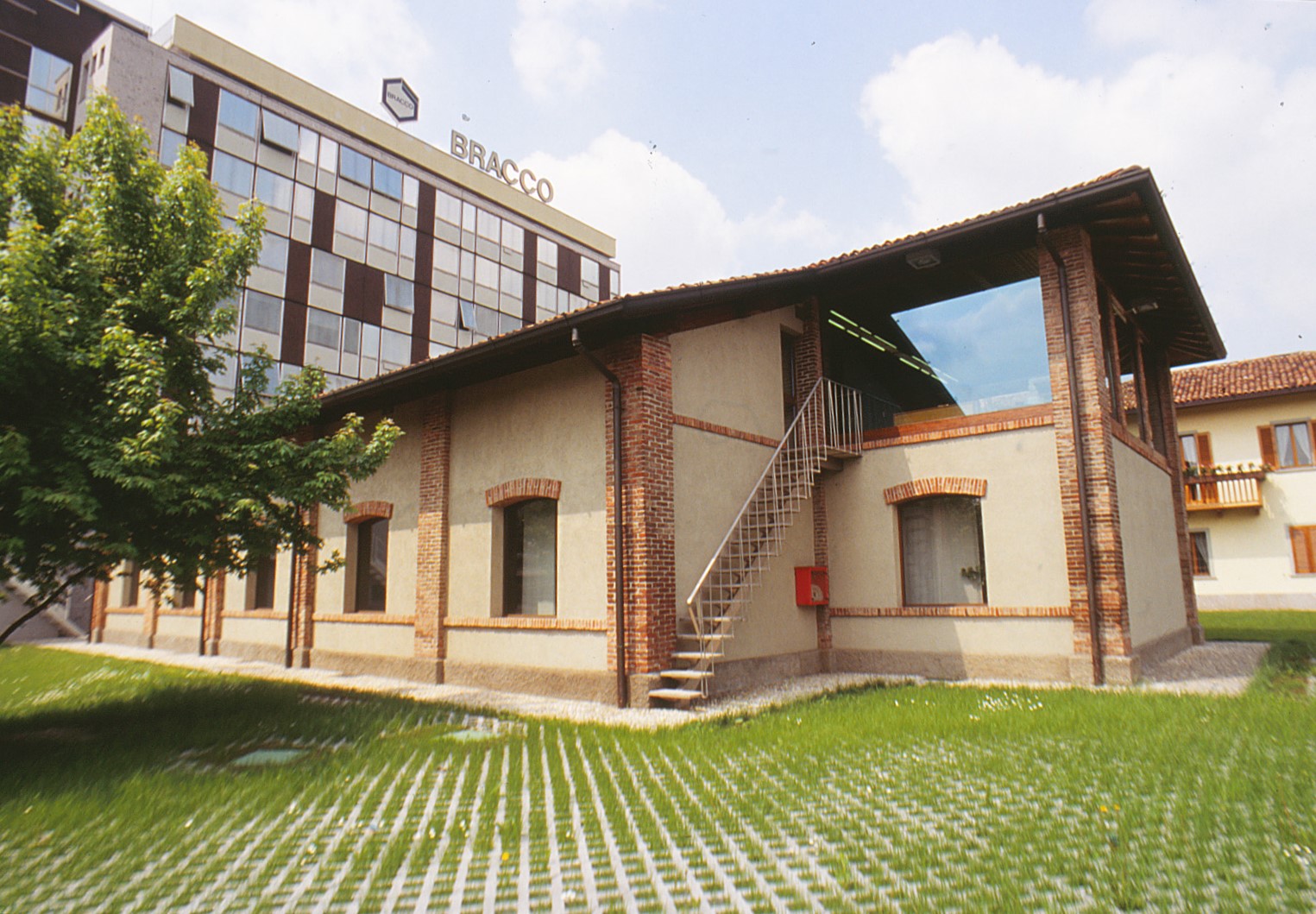
It is in this vibrant corner of Milan that Bracco, a leading company in diagnostic imaging, inaugurated its new headquarters in 2022, reconnecting with its historical roots in Lambrate.
Ortica: all the colours of east Milan
A bulwark of the Resistance, Ortica lies on the border with Lambrate. This small neighbourhood, once filled with vegetable gardens, later became home to workers who settled in two blocks of council houses near the railway. Working class to its core, Ortica has retained its character even amidst urban redevelopment projects. The transformation began with the historic Balera (dancehall) and continued with the area of the former Richard Ginori factory, which now houses lofts for artists and new creative talents, and the murals created by the Orticanoodles collective, which bring colour and history to the neighbourhood. These murals include the Wall of Workers, the Wall of the Great Women of the Twentieth Century, the Wall of the Partisan and the Bishop, the Wall of Cooperation, the Wall of Anti-Fascists and Political Deportees, the Mural of Sport, the Wall of Migrations, and, most recently, the Wall of Rights.
Bracco: the history
Elio Bracco, fervente irredentista, che ave
Elio Bracco, a fervent irredentist who endured two years of detention in the Austrian prison of Graz for his patriotism, founded the Società Italiana Prodotti E. Merck – Anonima in Milan on 1 June 1927, with its headquarters in Piazzale Susa. On 23 November 1931, following the growth in orders and the hiring of new staff, a new factory was inaugurated in Via Renato Fucini.
In 1934, after graduating in Chemistry and Pharmacy at the University of Pavia and completing a period of study and training at Merck in Darmstadt, Elio’s son, Fulvio Bracco, joined the company.
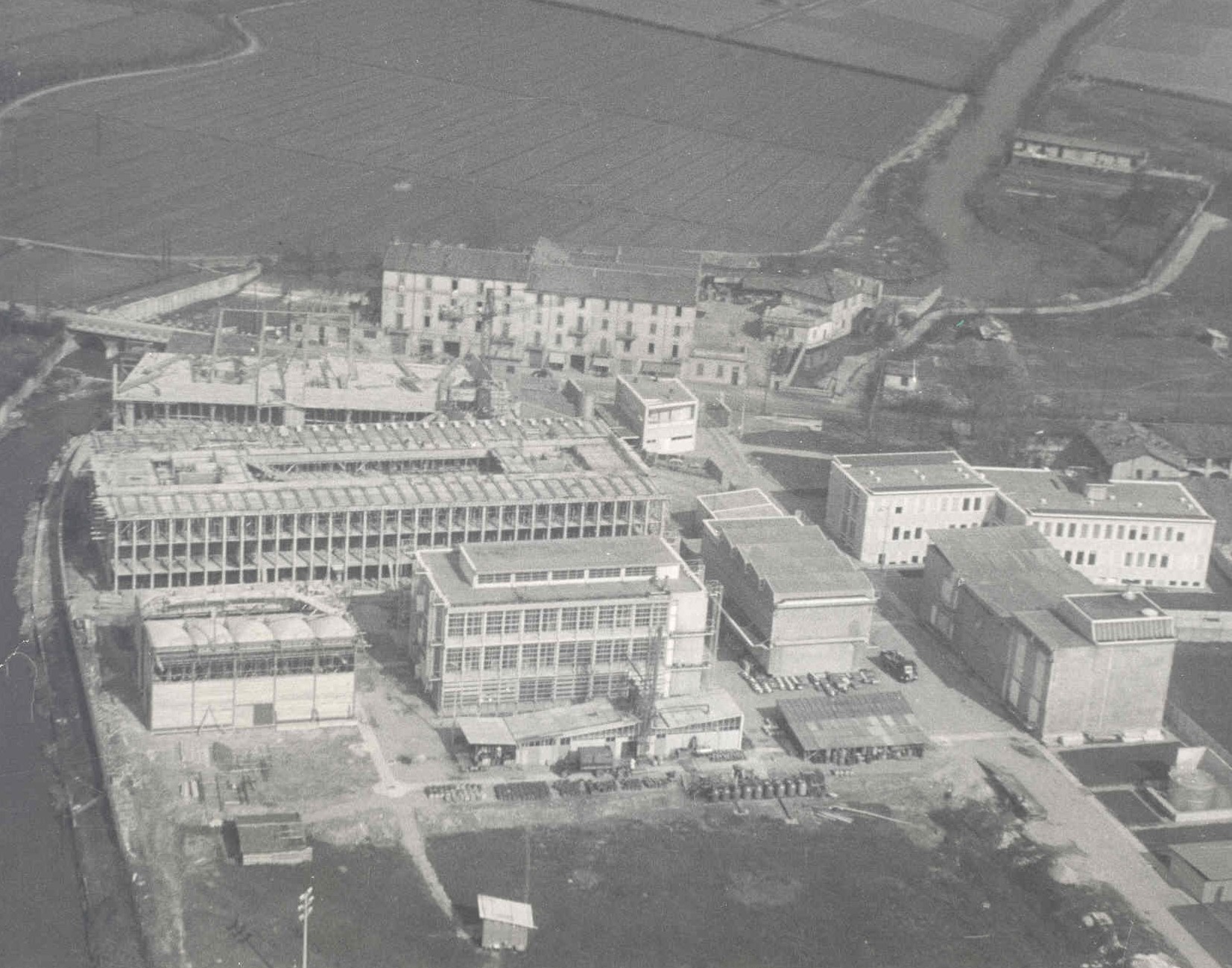
World War II brought significant challenges, effectively halting production until the end of the conflict. Undeterred, in 1949 Fulvio Bracco began construction of a new production plant in Lambrate, entrusted to the architect, Giordano Forti. This facility, occupying 50,000 square metres, marked the beginning of Bracco’s growth in Italy and globally.
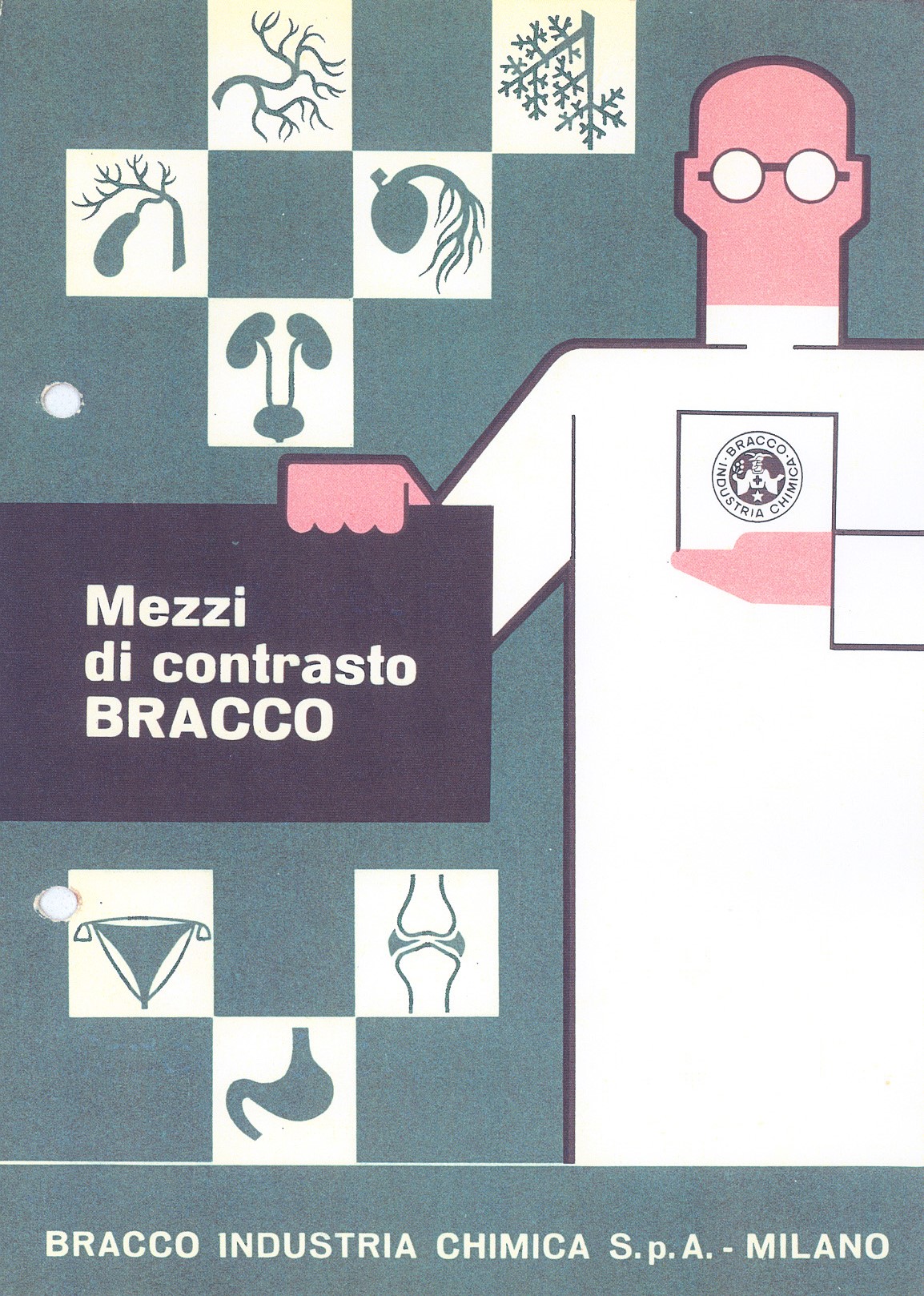
During the 1950s, the virtuous collaboration between the entrepreneur, Fulvio Bracco and the scientist, Ernst Felder, a chemist and director of Bracco research, established the company as a world leader in contrast media for medical diagnostics – an essential field for prevention and healthcare. A groundbreaking development was an innovative molecule, Iopamidol (B 15000), a non-ionic, ready-to-use, and safe contrast medium.
Since then, Bracco’s research has continued non-stop, as evidenced by numerous innovations in Magnetic Resonance, Ultrasonography, Radiomics, and Nuclear Medicine.
The period from 1980 to 2000 marked the Group’s internationalisation, driven by Diana Bracco, the current President and CEO. Under her leadership, the company has achieved global success with cutting-edge products for all types of diagnostic imaging.
va pagato il suo patriottismo con due anni di detenzione nel carcere austriaco di Graz, fonda a Milano il 1° giugno 1927 la “Società Italiana Prodotti E. Merck – Anonima”, con sede in piazzale Susa. Il 23 novembre del 1931 grazie alla crescita degli ordinativi e la parallela assunzione di nuovo personale, viene inaugurato un nuovo stabilimento in via Renato Fucini.
Nel 1934, dopo la laurea in Chimica e Farmacia all’Università di Pavia e un periodo di studio e formazione presso la Merck di Darmstadt, viene assunto Fulvio Bracco, figlio di Elio.
La Seconda guerra mondiale rende difficili le cose e impedisce di fatto la produzione fino alla fine del conflitto. Fulvio Bracco non si perde d’animo e nel 1949 cominciano i lavori di costruzione, affidati all’architetto Giordano Forti, del nuovo stabilimento di produzione a Lambrate su una superficie di 50 mila metri quadrati, da cui è partita la crescita di Bracco in Italia e nel mondo.
Negli anni ’50 il legame virtuoso tra l’imprenditore Fulvio Bracco e lo scienziato Ernst Felder, chimico e direttore della ricerca Bracco, ha condotto l’impresa a essere leader mondiale nel campo dei mezzi di contrasto per la diagnostica medica, una disciplina essenziale per la prevenzione e per la salute delle persone. Punta di diamante fu una molecola innovativa, lo Iopamidolo (B 15000), un mezzo di contrasto non ionico, pronto all’uso e sicuro.
Da allora la ricerca Bracco non si è più fermata, come dimostrano i tanti prodotti innovativi nel campo della Risonanza Magnetica, dell’Ultrasonografia, della Radiomica e della Medicina Nucleare.
Gli anni che vanno dal 1980 al 2000 rappresentano il periodo dell’internazionalizzazione del Gruppo, che vede protagonista Diana Bracco, attuale Presidente e CEO, con l’affermazione sui mercati mondiali grazie a prodotti all’avanguardia per ogni tipo di diagnostica per immagini.
The Bracco Historical Archive
In January 1998, under Diana Bracco, President and CEO of the Group, the project to create the company’s Historical Archive was launched. Its aim was to preserve and highlight the value of all documentation useful for reconstructing the history of the company and its scientific research activities. Since then, the archive has expanded its content and begun the digitisation of many documents.
In 2022, to mark the Group’s 95th anniversary, the Bracco Historical Archive was opened to the world through the creation of a bilingual website featuring hundreds of videos, photographs, and previously unpublished documents. This fascinating journey through time is organised into five distinct sections: Family, Company, Innovation, Sustainability, and Culture. International outreach, innovation, corporate responsibility, patronage, and environmental awareness are fundamental to the Bracco family and Group’s identity. These strong values are safeguarded, shared, and passed on to future generations by the Historical Archive, now also in digital form.
In collaboration with