The former industrial plants of Bologna that now produce culture
Long a crossroads of cultures, ideas and exchanges, Bologna is a city in constant evolution, carrying a strong industrial memory that tells a story of work and commitment. In the Porto-Saragozza district, then north along the course of the Navile canal, and further still towards the Bolognina, stand the buildings of an industrial Bologna that has not entirely disappeared. These fascinating architectures, former factories and revitalised old depots, weave together stories of people, machines and labour with new cultural and social challenges. Then there are the Civic Museums of Bologna, united by the desire to narrate the city’s history and its economic, scientific, social, artistic and industrial developments: MAMbo – the Museum of Modern Art of Bologna, the Museum for the Memory of Ustica, and the Museum of Industrial Heritage.
Here, then, are the places in Bologna where one can explore the city’s industrial legacy, within a landscape that blends echoes of the past with contemporary life.
Manifattura delle Arti (Factory of the Arts)
A place that perfectly embodies the spirit of a Bologna that is always in motion. In the Porto-Saragozza district, the Manifattura delle Arti was born from the regeneration of a central area covering 100,000 square metres within Porta Lame, stretching from Riva di Reno to the Darsena and reaching the foot of the Salara, which from the Renaissance to the nineteenth century was the mercantile and manufacturing heart of Bologna’s economy. Since 2003, thanks to the combined efforts of the Municipality and the University, and to the urban regeneration project entrusted to the architect Aldo Rossi, the area has become a fully fledged cultural hub, one of the largest in Europe. In its current form, it houses, within former industrial plants, some of the city’s main cultural institutions: the Cineteca di Bologna in the former Manifattura Tabacchi (early 1900s); MAMbo – the Museum of Modern Art of Bologna in the former Forno del Pane (also early 1900s); the University’s Department of Communication Studies in the former Mulino Cartiera Tamburi, and the Department of Music and Performing Arts in the former municipal slaughterhouse (late 1800s), which also accommodates the Cinema Lumière. The Cassero LGBTQIA+ Center – a political and community organisation that has been advocating for LGBTQIA+ rights for more than 40 years – is based in the Salara (mid-1700s), a warehouse once used for storing salt and the only surviving building that bears witness to the presence of the old river port. In short, it is a place where artistic and cultural production merge, creating an environment that encourages active civic participation. It has become a concrete example of how an industrial structure can evolve into a dynamic centre that fosters the meeting of diverse forms of expression and cultural reflection.
Ex Manifattura Tabacchi
The Manifattura Tabacchi has a long and fascinating history dating back to the early 1900s, when it was inaugurated as one of the most important plants for the production of tobacco and cigarettes in Italy. It quickly became an economic hub for Bologna, employing large numbers of workers and leaving a profound mark on the city’s history of labour and industrial production. Today, the spaces have been repurposed to serve as cultural venues.
MAMbo – Museo d’Arte Moderna di Bologna (Bologna Museum of Modern Art) and the Museo Morandi
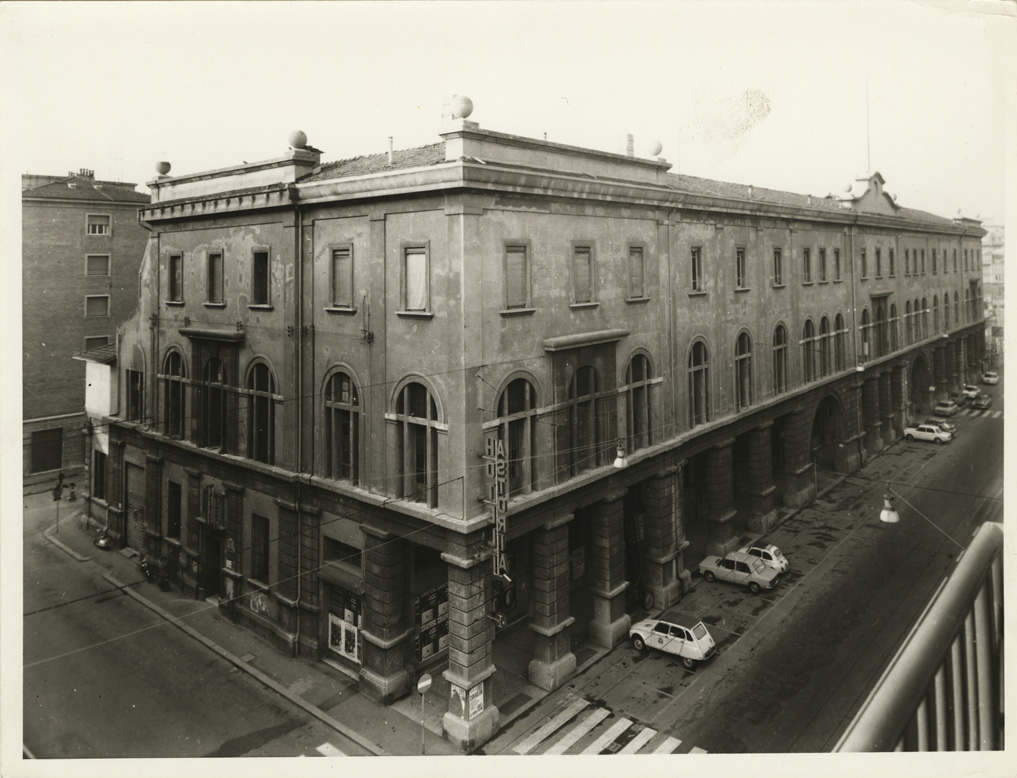
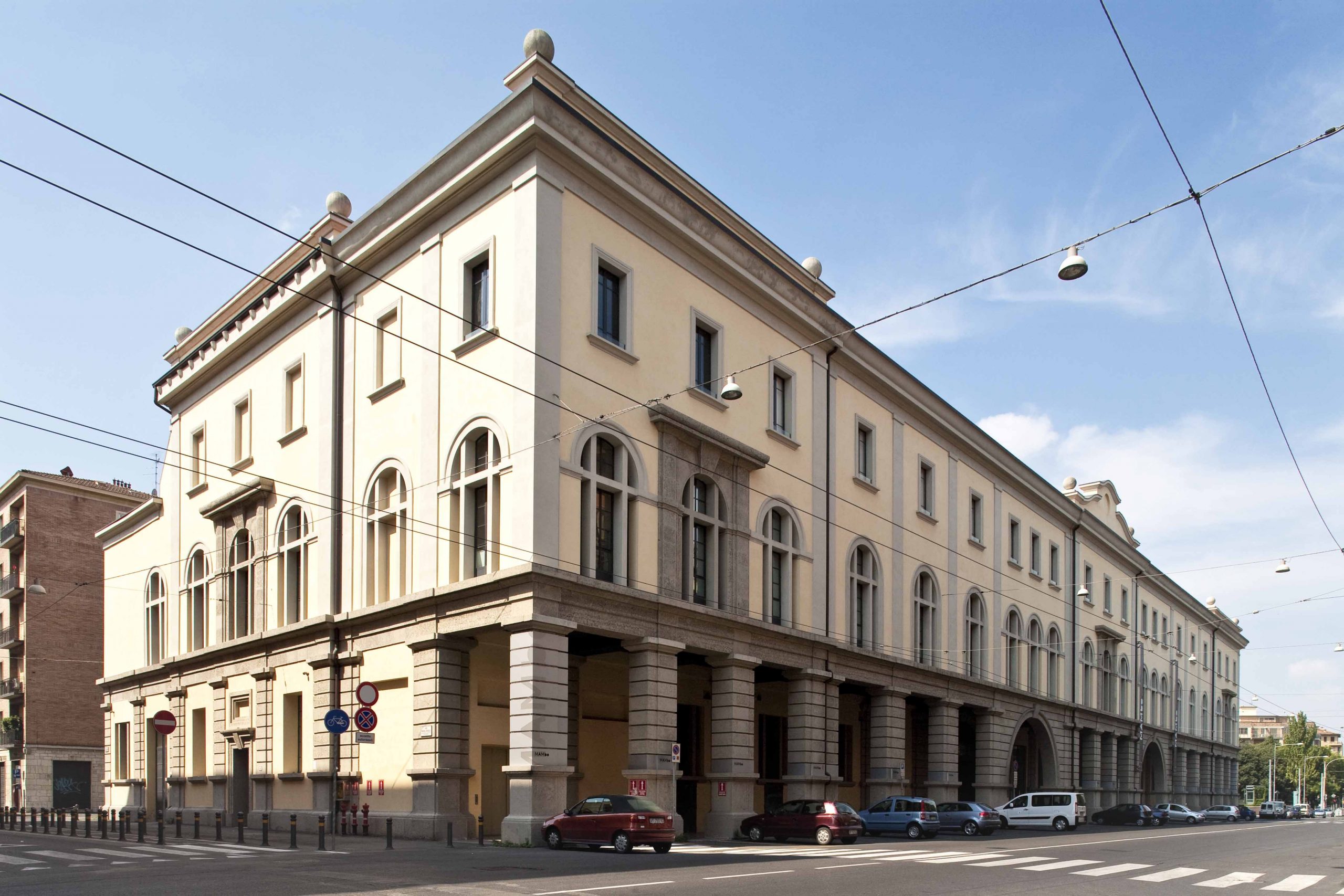
One of the city’s most innovative spaces, it is another place where industrial archaeology and contemporary culture meet in striking fashion. Housed in the former Forno del Pane, an old bakery erected in 1915 and closed in 1958, MAMbo hosts a substantial permanent collection of modern and contemporary art, with works ranging from the 1950s to today, as well as temporary exhibitions set up on the ground floor in the Sala delle Ciminiere, where the original fireplaces used for baking subsidised bread are still preserved. Through a dynamic approach, the museum explores the present through an exhibition path focused on research, helping to define new artistic directions by monitoring the most current and vibrant forms of experimentation.
Occupying the long wing of the former Forno del Pane, adjacent to MAMbo’s permanent collection, is the Museo Morandi, which holds the most complete and significant public collection dedicated to the pictorial genius of Giorgio Morandi. Its uniqueness stems from the precious union between the works belonging to the civic collection and the generous bequest from the artist’s sister, Maria Teresa Morandi, creating an unbreakable bond between the city and its illustrious son.
La Salara
The first salt depot in Bologna dates back to the mid-1500s, when the city’s port was also established. At that time, salt travelled along the Po and the Reno rivers, and then through Bologna’s canal system. By the late 1700s, as trade expanded, the depot we still see today was constructed, larger than its predecessor and the only surviving building that bears witness to the existence of a river port in Bologna.
Today the Salara houses the Cassero LGBTQIA+ Center, one of Italy’s leading cultural and social centres dedicated to the LGBTQIA+ community, a symbolic place of inclusivity, activism and culture since 1982. A multifunctional space that hosts art exhibitions, film screenings, theatre performances, music evenings, debates and meetings.
The Industrial Heritage Museum
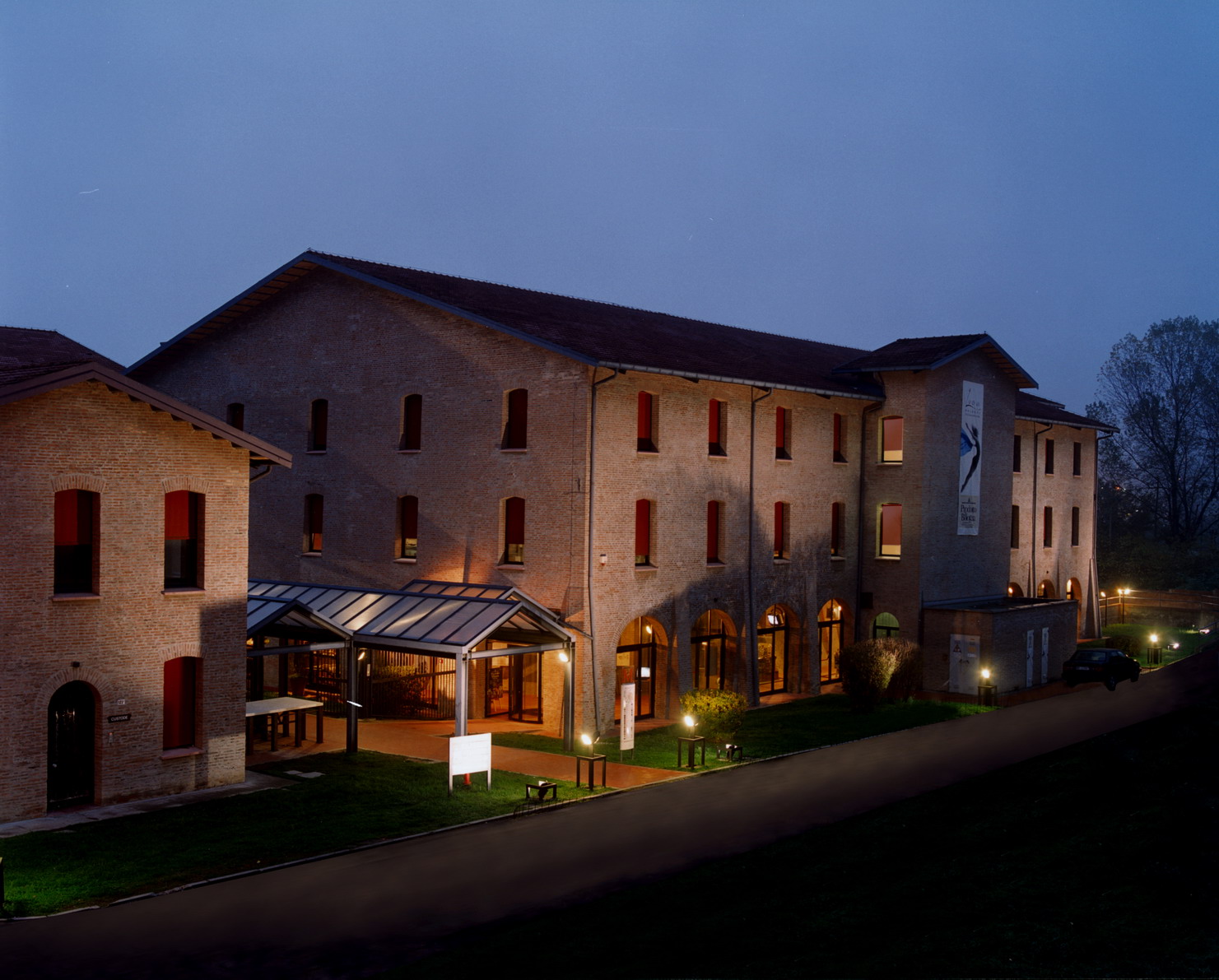
Leaving the Porto-Saragozza district and following the Navile, you reach the Industrial Heritage Museum, housed in the atmospheric setting of the former Fornace Galotti, a nineteenth-century brickworks that remained active until 1996 and has served as a museum since 1998. Inside, machines, models, prototypes, scientific instruments, teaching apparatus and multimedia content narrate the history of industrial Bologna from the fifteenth to the twenty-first century: from the city of water and silk, through the Industrial Revolution, to the rise of today’s mechanical and electromechanical district. Of particular interest is the working 1:2 scale model of a sixteenth-century silk mill, a true symbol of the museum. Since 2019, the exhibition route has included the section La Fabbrica del Futuro, a multimedia and interactive laboratory where visitors can explore the technologies and trends of contemporary industry.
Museum for the Memory of Ustica
We now move to the Bolognina, a lively and dynamic district that is home to the Museum for the Memory of Ustica, inaugurated in 2007 in lasting remembrance of the 1980 tragedy in which the Bologna-Palermo flight crashed into the sea with 81 people on board, all of whom lost their lives. The moving permanent installation A proposito di Ustica, created by the French artist Christian Boltanski, invites visitors into a deeply emotional experience: the aircraft wreckage positioned at the centre of the room; 81 lights on the ceiling that switch on and off to the rhythm of a breath; 81 black mirrors along the walls, reflecting those who walk the gallery; and 81 speakers that play whispered phrases. Then, the personal belongings of the victims arranged in nine large sealed black cases, along with film footage and in-depth newspaper articles. The museum is housed in the area of the former Zucca tramway, a complex of buildings that served as Bologna’s tram and bus depot from 1880 to 1963.
Article written in collaboration with